
partial ACL tear healing is possible in some people, but it is not something doctors assume based on rest alone. If you are wondering can a partial ACL heal, the answer depends on how much of the ligament remains intact, how stable the knee feels during activity, and whether the injury behaves more like a mild sprain or an unstable tear. That is why a careful assessment matters. Doctors look at symptoms, physical examination findings, MRI, and functional instability. In many cases, the challenge is deciding whether a knee with a suspected partial tear is truly stable enough to recover well without surgery.
1. Can partial ACL tear healing really happen?
Yes, partial ACL tear healing can happen, but it is not guaranteed, and it does not mean the ligament always returns to normal strength or function. A partial tear means some ACL fibers are still intact. In the right situation, those remaining fibers may continue to provide enough restraint for daily activity and sometimes even for sports after rehab.
The key issue is not only whether tissue heals on a scan. It is whether the knee is functionally stable. A person may show signs of healing on imaging yet still experience giving way, poor rotational control, or recurrent swelling. That is why doctors assess both structure and function when discussing partial ACL tear healing.
Recent imaging reviews such as Dos Reis Morimoto et al. (2026) and Khaled et al. (2025) highlight how partial cruciate injuries can be difficult to define precisely, especially when imaging findings and clinical instability do not fully match. In younger patients, nonoperative care may work in selected cases, but outcomes vary, as noted by Hannon et al. (2026).
If your diagnosis has been uncertain, this guide on partial ACL diagnosis can help explain why some injuries are initially missed.
2. What doctors look for when deciding if a partial tear may heal well
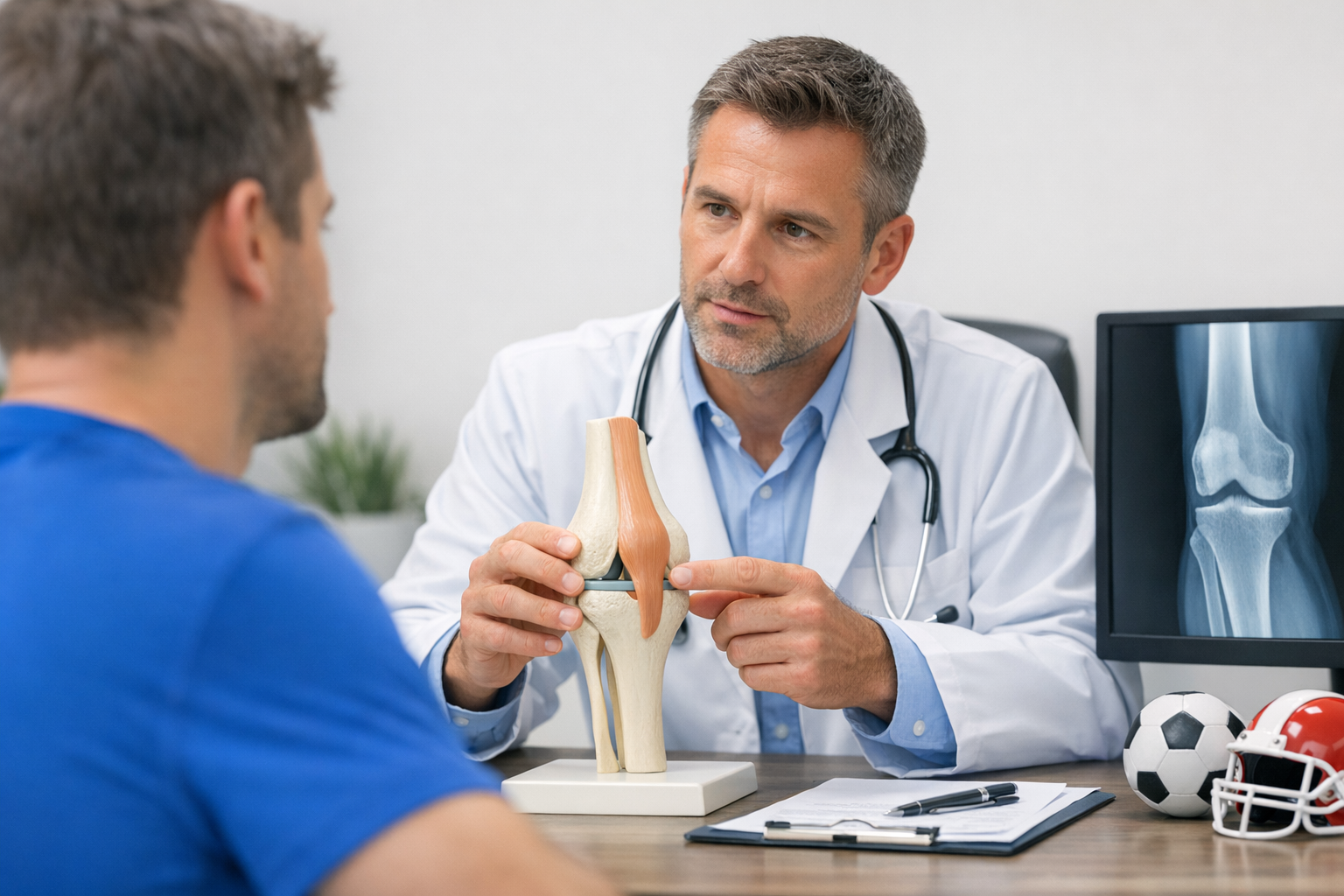
Doctors do not make this decision from one test alone. They usually combine history, examination, imaging, and follow-up response over time. When discussing partial ACL tear healing, they often focus on four areas.
2.1 Symptoms and injury pattern
partial ACL tear symptoms can include pain, swelling, loss of confidence, and a feeling that the knee is unreliable during cutting or pivoting. Some people never heard a pop. Others can walk normally within days, which can make the injury seem minor even when instability is present.
If your presentation was subtle, this article on an atypical presentation may feel familiar.
Symptoms that make doctors more cautious include:
- Repeated giving way episodes
- Swelling that returns with activity
- Difficulty with pivoting, decelerating, or changing direction
- A knee that feels different from the uninjured side despite rest
2.2 Physical examination
A careful knee exam remains essential. Clinicians may use the Lachman test, pivot shift, anterior drawer, and comparison with the opposite knee. This is where the debate about partial ACL vs complete ACL tear often becomes clinically important. Some partial tears behave almost like complete tears if the remaining fibers do not control translation and rotation effectively.
The relationship between bedside tests and quantified assessment is explored in this article on the Lachman test.
2.3 MRI findings
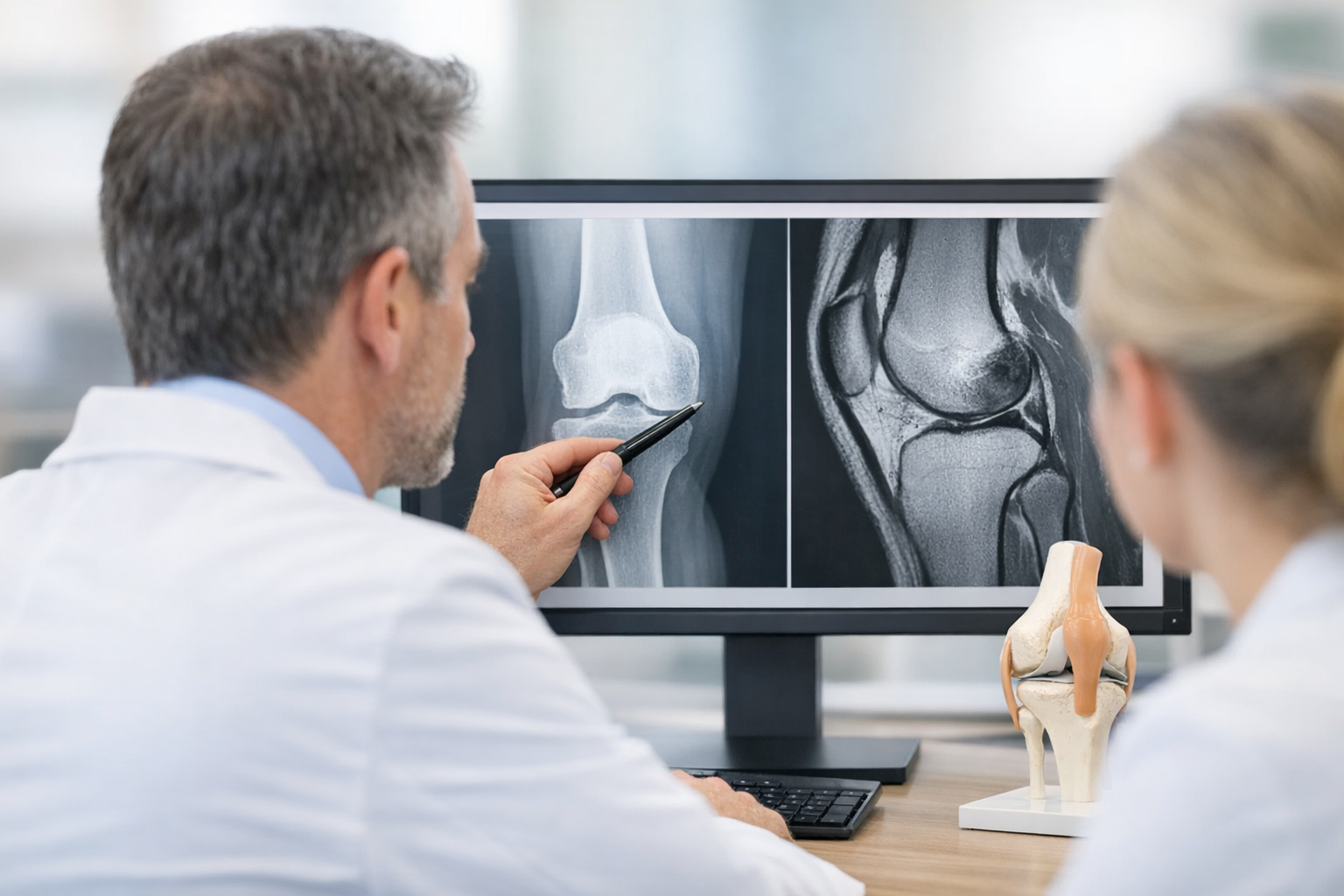
MRI helps doctors look at ligament fiber continuity, edema, orientation, and associated damage such as bone bruising, meniscus tears, cartilage injury, or other ligament injuries. But MRI partial ACL tear accuracy is not perfect, especially in borderline cases. A ligament can appear partly preserved while the knee still functions poorly.
That is one reason persistent instability after a “normal” or inconclusive scan should not be ignored. If that sounds familiar, read more about a normal MRI with ongoing giving way symptoms.
2.4 Functional stability over time
Doctors often watch how the knee responds to early rehabilitation. If swelling settles, strength returns, and there is no recurrent instability, partial ACL tear healing is more likely to be clinically acceptable. If the knee repeatedly buckles, nonoperative treatment becomes less reassuring.
Timing also matters. Early assessment can be limited by pain, swelling, and muscle guarding, which is why repeat evaluation is common after an acute ACL injury.
3. Why borderline cases are so difficult
The hardest cases are not obvious complete ruptures. They are the knees where symptoms, exam, and imaging do not align neatly. A patient may have mild swelling, a not-quite-normal Lachman, and an MRI report that says sprain, low-grade injury, or possible partial tear. In that setting, the real question is not just whether fibers remain, but whether they still control motion.
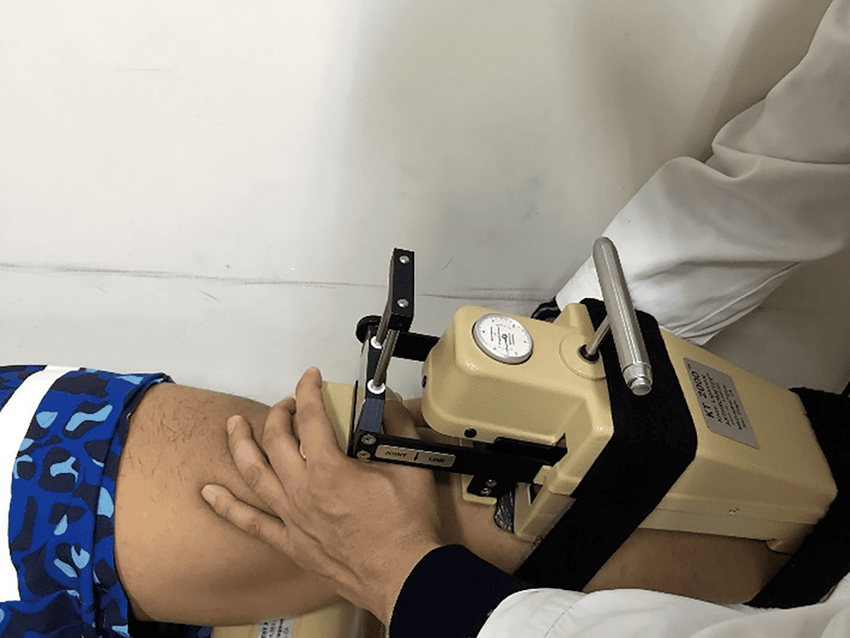
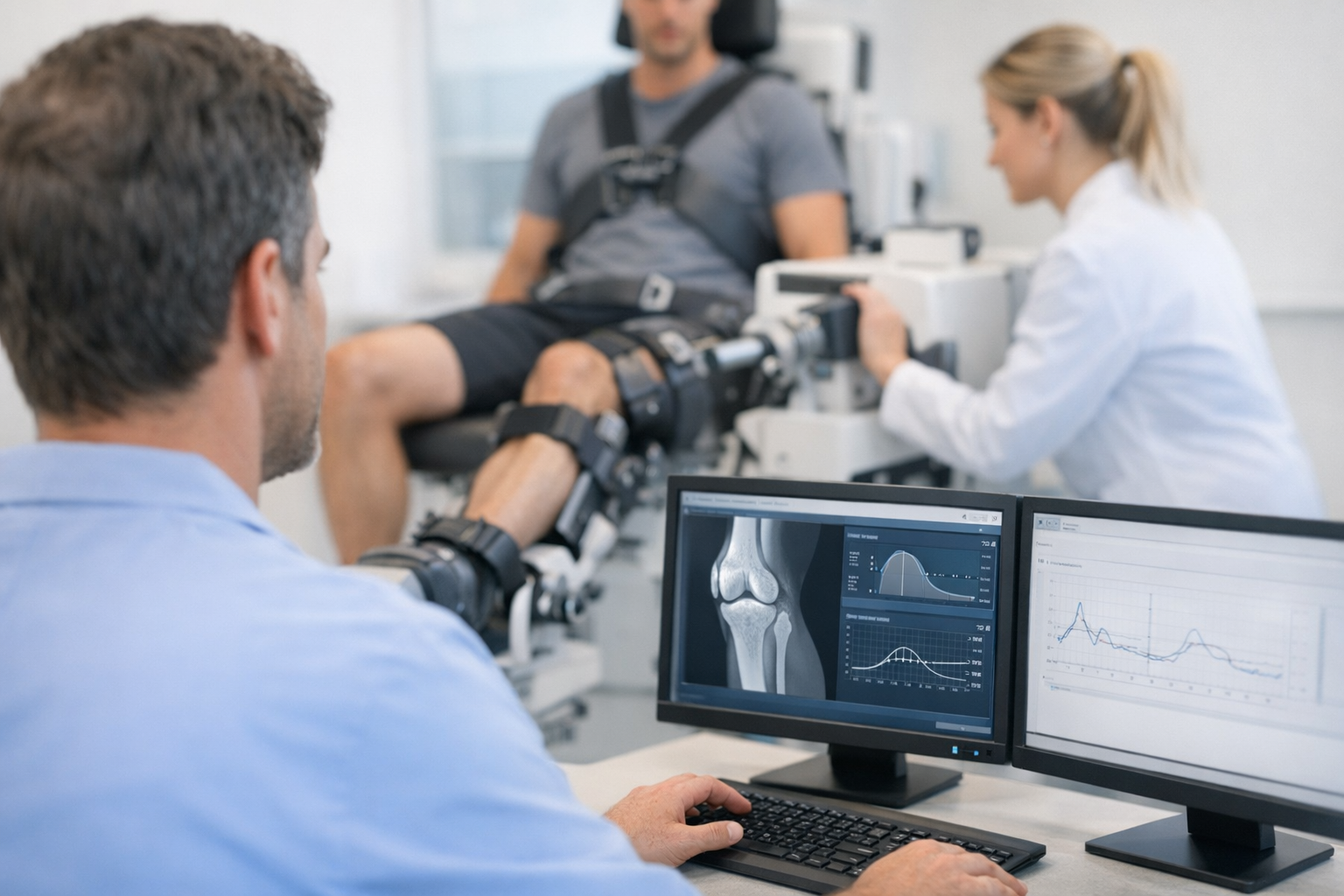
This is where ACL laxity testing becomes relevant. Objective comparison between the injured and uninjured knee may help clarify whether a suspected partial tear is behaving like a stable injury or an unstable one. It adds information that static imaging alone may not fully capture.
For borderline imaging pathways, this article on a borderline MRI case explains why doctors may look beyond the MRI report.
A practical decision aid doctors often use looks like this:
- Review the mechanism – twisting, pivoting, valgus load, contact or non-contact.
- Check symptoms – swelling, trust in the knee, giving way, sport demands.
- Examine the knee – compare laxity and rotational findings with the other side.
- Use MRI – assess the ACL plus meniscus, cartilage, bone bruise, and other ligaments.
- Quantify instability if needed – especially when the MRI or exam is equivocal.
- Reassess after rehab – stable knees may continue nonoperative care, unstable knees may need surgical discussion.
Survey data from Frey et al. (2025) suggests that management of isolated partial ACL tears is not fully uniform among experienced surgeons, which reflects how nuanced these decisions can be.
4. Where objective knee laxity measurement fits
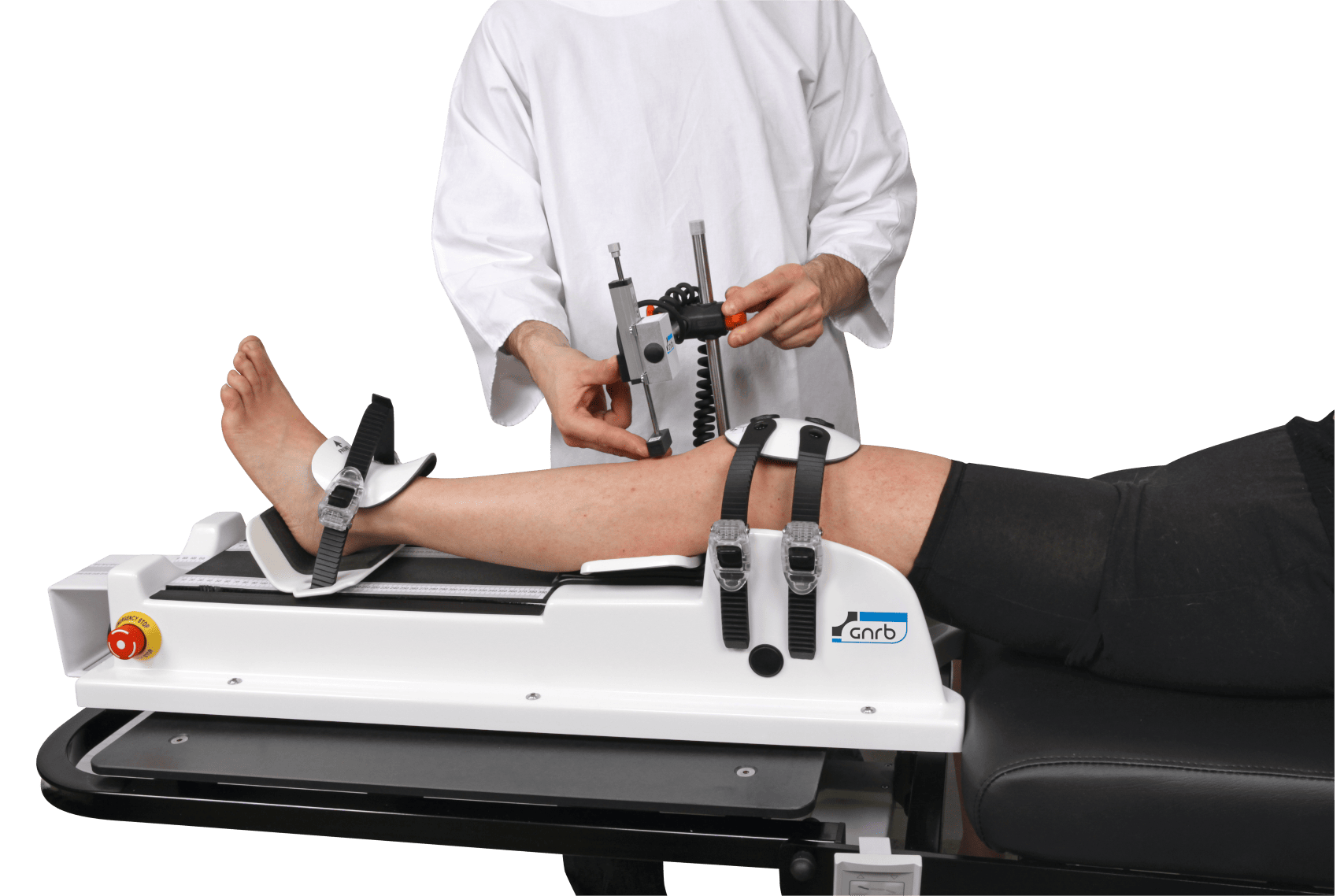
When the diagnosis is uncertain, objective knee laxity measurement can complement the clinical exam and MRI by quantifying side-to-side instability under controlled loading. This is particularly relevant in suspected partial tears, where the question is often whether remaining fibers still provide enough restraint.
In practical terms, ACL laxity testing may help show whether a painful but stable knee is improving, or whether a “partial” tear is acting more like a functionally insufficient ACL. A 2023 Cojean study is often cited for the point that GNRB detected partial ruptures better than MRI in that context, which is why GNRB partial ACL rupture assessment has gained attention in borderline cases. That said, MRI remains complementary and is still important for evaluating associated injuries and for pre-operative planning when reconstruction is being considered.
For a broader overview of robotic laxity testing, objective devices can add reproducible data to the workup. Examples include the GNRB arthrometer and the Dyneelax knee arthrometer, both of which are used to support quantified assessment rather than replace MRI.
If you want a fuller framework for quantified instability assessment, this resource explains how objective testing fits into decision-making.
There is also ongoing imaging research trying to better define dynamic partial injuries, including Klon et al. (2026), which evaluated stress MRI approaches. This reinforces an important clinical point: static MRI and dynamic instability assessment may answer different, but complementary, questions.
5. partial ACL tear treatment: when rehab may be enough and when it may not
partial ACL tear treatment depends on the person, not just the scan. Many patients begin with nonoperative care, especially if the knee is stable, daily life is manageable, and sport demands are modest. This usually includes swelling control, range of motion work, quadriceps and hamstring strengthening, neuromuscular training, and a gradual return-to-activity plan.
For selected patients, partial ACL tear healing may progress well enough with rehabilitation alone. This is more likely when:
- The knee does not repeatedly give way
- Exam findings suggest limited laxity
- There are no major associated meniscal or cartilage injuries
- The patient can restore strength and control with rehab
But doctors become more concerned when:
- Instability persists despite structured therapy
- Pivoting sports are important to the patient
- The tear behaves like a high-grade functional injury
- There are associated injuries needing surgical planning
This is where the distinction between partial ACL vs complete ACL tear matters less than many patients expect. A partial tear that causes recurrent instability may still lead to a surgical conversation, while a low-grade partial tear with a stable knee may not.
For a broader view of ACL tear detection, it helps to understand how diagnosis and treatment planning connect.
6. Key takeaways and next steps
partial ACL tear healing is possible, but the more important question is whether the knee heals into a stable, trustworthy joint. Doctors usually look at symptoms, exam findings, MRI, and sometimes objective knee laxity measurement to judge that. If your knee still feels unstable, that deserves attention even if the MRI sounds reassuring.
In short:
- partial ACL tear healing can occur, but not every partial tear becomes functionally stable.
- can a partial ACL heal is best answered with a clinician-led assessment, not a scan report alone.
- partial ACL tear symptoms such as giving way and recurrent swelling matter as much as pain.
- MRI partial ACL tear accuracy can be limited in subtle or borderline injuries.
- ACL laxity testing may help clarify whether a partial tear is stable or unstable, while MRI remains complementary for associated injuries.
- partial ACL tear treatment may be nonoperative or surgical depending on function, sport demands, and repeat instability.
If you are trying to understand whether your MRI and symptoms match, this discussion of MRI versus arthrometer pathways may help. The best next step is a review with an orthopaedic or sports medicine clinician who can compare both knees, assess dynamic stability, and tailor treatment to your goals.
Clinical references (PubMed)
1) 2026 – Hannon et al. – Outcomes of Initial Nonoperative Management of Partial Anterior Cruciate Ligament Tears in Pediatric Patient. – J Pediatr Soc North Am – DOI: 10.1016/j.jposna.2026.100330 – PMID: 41908101 – PubMed
2) 2026 – Dos Reis Morimoto et al. – Diagnosis and imaging assessment of partial anterior and posterior cruciate ligament tears. – Skeletal Radiol – DOI: 10.1007/s00256-026-05124-3 – PMID: 41555030 – PubMed
3) 2026 – Klon et al. – Stress MRI assessment of partial anterior cruciate ligament injury based on three-dimensional analysis. – Quant Imaging Med Surg – DOI: 10.21037/qims-2025-1-2498 – PMID: 42273109 – PubMed
4) 2025 – Frey et al. – Management of Isolated Partial ACL Tears: A Survey of International ACL Surgeons. – Orthop J Sports Med – DOI: 10.1177/23259671241311603 – PMID: 39931635 – PubMed
5) 2025 – Khaled et al. – Complete and Partial Tears of the Anterior Cruciate Ligament: Acute and Evolution. – Semin Musculoskelet Radiol – DOI: 10.1055/s-0045-1806795 – PMID: 40393498 – PubMed