
Arthrometer Insights

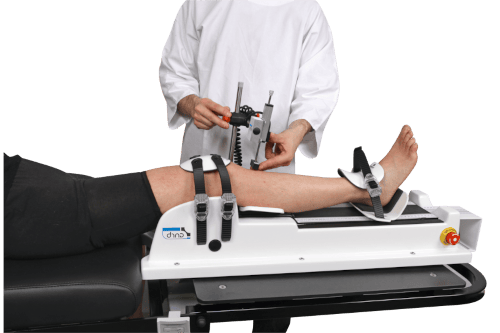
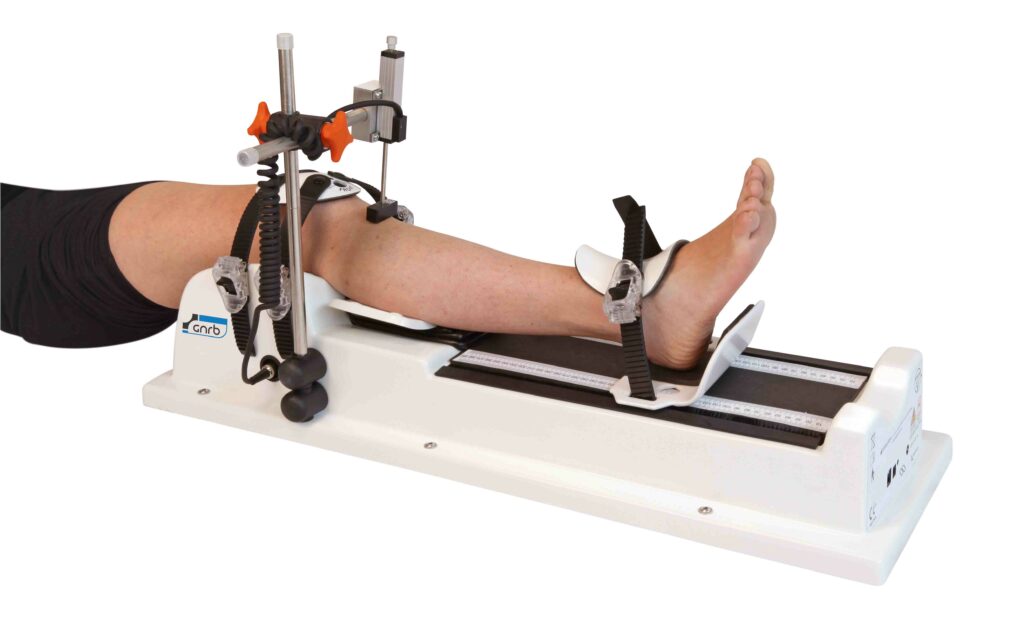
Dive into the world of medical devices with a special focus on knee quality arthrometers like GNRB and Dynelax. This category offers insights, analyses, and updates on various medical technologies, helping you stay informed about advancements, features, and the impact of these devices in healthcare.

high-grade pivot shift

High-Grade Pivot Shift: Clinical Meaning and Next Steps

A high-grade pivot shift is not just a “positive ACL test”. It is a clinically meaningful signal that the knee’s rotational knee instability is functionally relevant and may involve more than the intra-articular ACL alone. In day-to-day practice, it can change how you interpret exam findings, how you scrutinize imaging for lateral and posterolateral restraints, […]

High-Grade Pivot Shift: Clinical Meaning and Next Steps Read More »

Upgrade KT1000/KT2000, dynamic knee laxity testing

Dynamic Knee Stability Testing: How Multi-Axis Measures Fit the Care Pathway

In knee ligament care, the practical challenge is rarely “is something torn?” but “how unstable is this knee in function, in more than one plane, and how does that change with treatment?” dynamic knee laxity testing is a workflow tool for answering that question with repeatable, side-to-side comparisons that can be tracked across time. It

Dynamic Knee Stability Testing: How Multi-Axis Measures Fit the Care Pathway Read More »

MCL valgus stress test

MCL Injuries: MCL Valgus Stress Testing, Grading, and Monitoring

In acute medial-sided knee pain, the MCL valgus stress test remains a fast, high-yield maneuver to guide triage, imaging, and early bracing decisions, especially when swelling and apprehension limit more complex exams. This workflow focuses on reproducible positioning, interpretation, and documentation so you can translate “opens up a bit” into clinically actionable language such as

MCL Injuries: MCL Valgus Stress Testing, Grading, and Monitoring Read More »

featured 13

Pediatric ACL injury diagnosis: Critical pitfalls to avoid

Accurate pediatric ACL injury diagnosis is often harder than “small adult ACL” thinking suggests. Pain inhibition, apprehension, variable cooperation, and open physes can all distort the exam, while MRI can be challenged by partial injuries, developmental anatomy, and timing. When the clinical picture is uncertain, the priority is not just labeling a tear, but also

Pediatric ACL injury diagnosis: Critical pitfalls to avoid Read More »

featured 12

Borderline ACL on MRI: How Functional Instability Testing Can Clarify

“Borderline” ACL findings on MRI can leave the team uncertain: the report suggests a sprain or partial disruption, yet the patient describes giving way and loss of trust in pivoting. In this gap, borderline ACL MRI instability testing aims to align structure with function by prioritizing clinical correlation and reproducible instability assessment. This is especially

Borderline ACL on MRI: How Functional Instability Testing Can Clarify Read More »

featured 11

Knee stability metrics: Practical insight when rehab fails

Title: knee stability metrics: Practical insight when rehab fails Slug: rehab-milestones-vs-knee-stability-metrics Meta Title: Rehab milestones vs knee stability metrics: decision guide Meta Description: When hop tests and strength pass but laxity persists, interpret knee stability metrics with context: translation, pivot shift, and graft maturation. Focus Keyword: knee stability metrics Delete these META lines after pasting

Knee stability metrics: Practical insight when rehab fails Read More »

featured 10

Acute Knee Ligament Injury triage in Urgent Care: A Triage Algorithm for Suspected Ligament Injury

Acute knee trauma is common in urgent and emergency settings, but soft tissue injuries are frequently missed when pain, swelling, or limited exam conditions obscure key signs. This workflow is an acute knee injury algorithm designed for rapid risk stratification, safe early management, and consistent documentation, with special attention to suspected ACL and multi-ligament patterns.

Acute Knee Ligament Injury triage in Urgent Care: A Triage Algorithm for Suspected Ligament Injury Read More »

runner

ACL return to sport criteria: Practical safer clearance

Return-to-sport decisions after ACL injury or reconstruction are rarely limited by one variable. Even when an athlete “passes” strength and hop testing, persistent functional instability can remain clinically relevant, particularly for cutting and pivoting sports. Modern ACL return to sport criteria increasingly aim to triangulate performance capacity (strength, hops, movement quality) with symptoms, psychology, and

ACL return to sport criteria: Practical safer clearance Read More »

combined ACL ALL reconstruction

Combined ACL ALL reconstruction: 1 vs 2-strand outcomes

Study Title: Comparable outcomes following combined ACL and ALL reconstruction using a 1-strand versus 2-strand back-and-forth technique: Propensity score matched study Authors: Guillaume Andre; Damien Block; Olivier Gosselin; Jean Hennequin; ELSAN Working Group; Julien Uhring Journal: Journal of Experimental Orthopaedics (J Exp Orthop.) Publication Date:  2026 DOI: 10.1002/jeo2.70658 Institution: COUBORTHO, Centre Coubertin/Hôpital-clinique Claude Bernard, ELSAN, Metz, France Combined ACL ALL

Combined ACL ALL reconstruction: 1 vs 2-strand outcomes Read More »