
For many athletes, the biggest question after a diagnosis is simple: can you play sports with a partial ACL tear? The answer is sometimes yes, but not safely in every case, and not in every sport. partial ACL tear sports decisions depend on symptoms, instability episodes, sport demands, rotational control, rehabilitation progress, and whether the knee stays stable under load. A partial tear is not always a harmless injury. Some people compensate well for a period, while others progress to more obvious instability or a complete rupture. The key is not guesswork. It is careful clinical assessment, risk stratification, and ongoing monitoring.
1. partial ACL tear sports: can some athletes keep playing?
Yes, some athletes can continue activity after a partial ACL injury, but that does not mean every athlete should. In real-world practice, partial tears sit in a gray zone. The ligament may still provide some restraint, yet the knee can remain vulnerable during cutting, pivoting, deceleration, landing, or contact.
When people search for partial ACL tear sports, they are usually asking two different questions:
- Can I keep playing now?
- What is the safest path to partial ACL tear return to sport?
Those are related, but not identical. Immediate participation may be possible in selected cases, while return to unrestricted sport usually requires more than symptom improvement alone. If you want more background on whether a partial ACL can recover biologically and functionally, this guide on healing potential is useful.
Athletes who may tolerate some level of sport better are often those with:
- No repeated giving-way episodes
- Minimal swelling after activity
- Good quadriceps and hamstring control
- No major pivoting demands in their sport
- No concerning associated meniscus or cartilage injury
- Near-symmetrical functional performance
By contrast, athletes in football, soccer, basketball, handball, rugby, and racquet sports usually place much higher rotational demand on the knee. In these settings, partial ACL tear sports decisions become more cautious because the ligament may be tested repeatedly under cutting and pivoting loads.
2. Risk depends on instability, not just pain or MRI wording
A common mistake is assuming that if pain is manageable, sport is safe. Pain matters, but instability matters more. Some athletes with a partial ACL tear do not report severe pain, yet they describe shifting, mistrust, buckling, or a knee that feels “off” during sudden changes of direction.
This is where the partial ACL tear risk of progression becomes important. A partial tear may remain stable in some people, but in others it may function poorly enough that ongoing sport increases the chance of a larger tear, recurrent instability, meniscal damage, or cartilage overload.
2.1 Signs that risk may be higher
- Giving-way episodes during daily life or sport
- Positive Lachman with soft endpoint
- Positive or near-positive pivot shift
- Recurrent swelling after training or games
- Loss of confidence during cutting or landing
- Associated meniscal symptoms such as locking or sharp joint line pain
- High-risk sport with pivoting, contact, or rapid deceleration
Clinical decisions in isolated partial ACL tears remain variable across surgeons, which is one reason patient-specific decision-making matters. Frey et al. (2025) highlighted this variability in an international surgeon survey, reinforcing that management is often individualized rather than based on a one-size-fits-all rule.
MRI findings can help classify the injury, but MRI alone should not decide whether partial ACL tear sports participation is reasonable. If you have been told your scan is “borderline” or symptoms do not match imaging, this workflow on borderline MRI may clarify the next steps.
Even newer imaging strategies are being explored. Klon et al. (2026) evaluated stress MRI for partial ACL injury, reflecting the broader clinical need to capture function and laxity better than standard static imaging alone.
3. Rotational instability and pivot shift often drive the real decision
In many athletes, the most relevant issue is not simple straight-line looseness. It is rotational instability. A knee may seem acceptable during jogging yet feel unreliable during planting, twisting, feinting, or returning to defense. That is why a careful exam for pivot shift, dynamic valgus control, landing strategy, and cutting mechanics matters so much in partial ACL tear sports planning.
The pivot shift test is particularly relevant because it reflects the combined problem of anterior translation and rotation. A partial ACL tear can still produce meaningful rotational instability, especially if secondary stabilizers are challenged or if neuromuscular control is poor. This article on pivot shift explains why exam findings can materially change decision-making.
Why does this matter for sport? Because many athletes do not fail in a straight line. They fail when they cut, land, rotate, or react under fatigue. In practical terms, an athlete might pass light gym work but still be unsafe in competitive play.
3.1 Sports with higher concern
Risk tends to rise in sports involving:
- Pivoting and sudden change of direction
- Unpredictable opponent contact
- Single-leg landing under speed
- Fatigue and repeated high-intensity efforts
That is why partial ACL tear sports recommendations differ between, for example, straight-line cycling and competitive soccer. For field athletes, this soccer-specific assessment workflow can help frame the discussion.
If the athlete reports instability despite a normal or low-grade MRI interpretation, clinicians should not dismiss the symptoms. This guide on a normal MRI but unstable-feeling knee is particularly relevant in these cases.
4. How clinicians assess a partial ACL tear before clearing sport
A safe decision is usually based on a combination of history, examination, imaging, and functional testing. No single test should be treated as the whole answer. This is especially true in partial ACL tear sports questions, where the goal is not merely naming the injury but understanding how the knee behaves.
4.1 The assessment usually includes
- Mechanism of injury and timing
- Instability history, including any buckling or shifting
- Swelling pattern after exercise
- Lachman, anterior drawer, and pivot shift examination
- Assessment for MCL, LCL, PLC, and meniscal injury
- Strength testing and hop or movement testing when appropriate
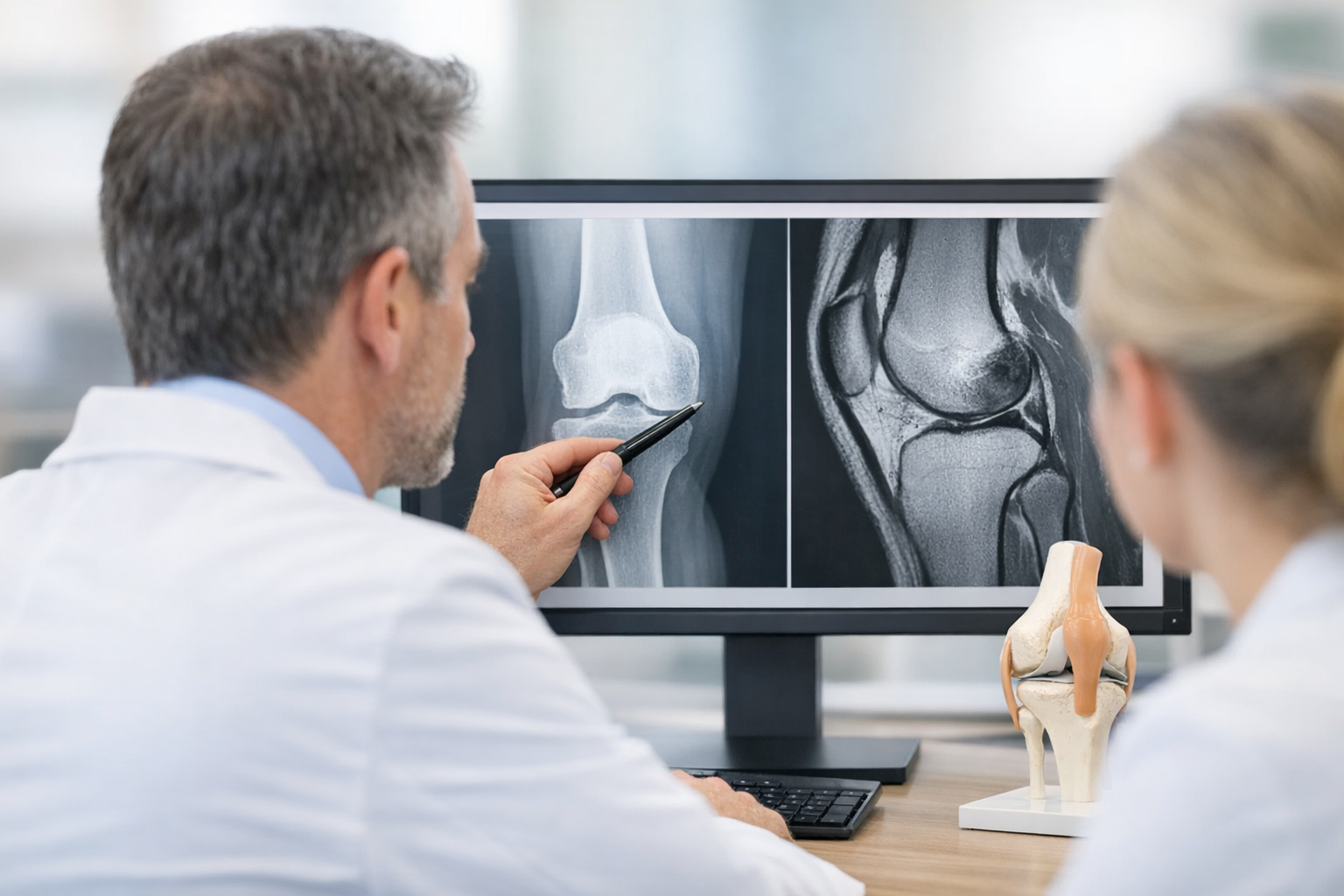
- MRI to assess ligament structure and associated damage
- objective knee laxity testing when instability needs quantifying
In the first two years after ACL injury, imaging changes do not always mirror clinical outcomes perfectly. Kvist et al. (2026) examined structural MRI changes and their relationship to outcome, supporting the idea that structure alone does not fully explain function.
This is one reason partial ACL tear monitoring should include more than symptom checklists. If partial tears are missed or underestimated, sport decisions may be based on incomplete information. This article on missed signs is worth reviewing.
In younger athletes, treatment pathways may also factor in age, growth status, MRI features, and activity profile. Grassi et al. (2025) developed an algorithm for skeletally immature patients, highlighting how patient characteristics influence management beyond the scan result itself.
5. Where robotic arthrometers fit in partial ACL decision-making
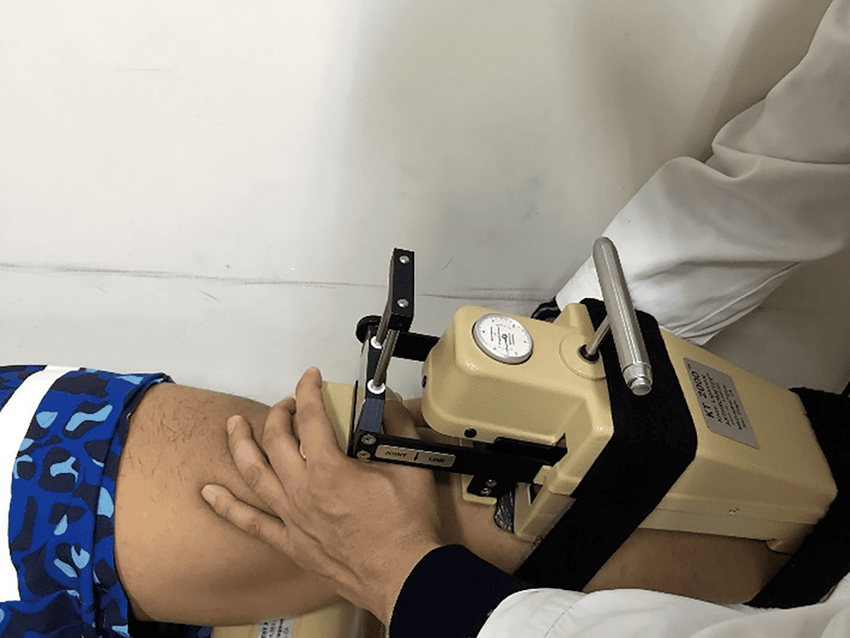
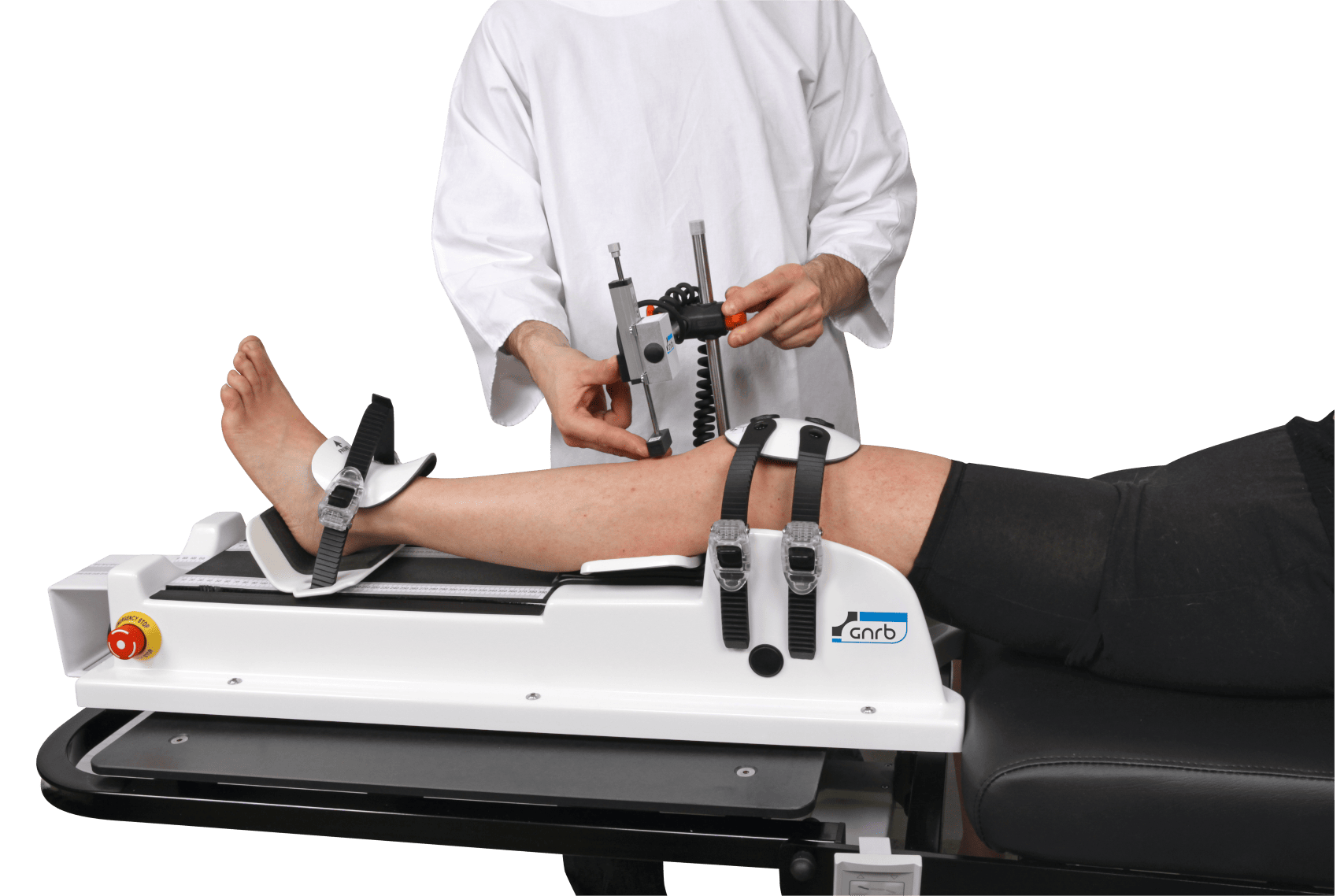
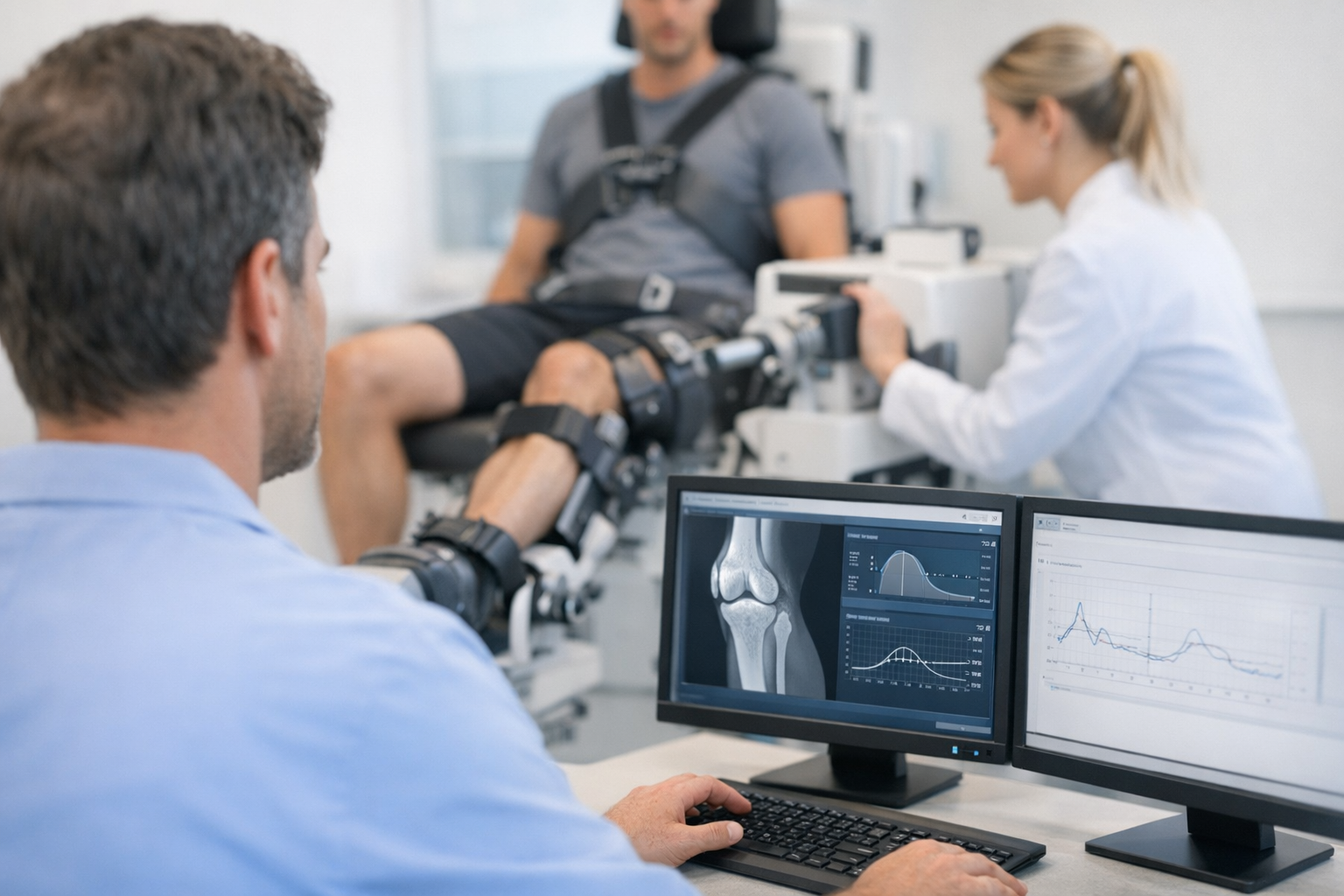
When clinicians need better functional detail, instrumented arthrometer partial ACL tear assessment can add value. Robotic arthrometers do not replace MRI, but they complement MRI and clinical examination by quantifying side-to-side anterior laxity and dynamic knee response under controlled loading. This can be especially helpful when MRI findings are equivocal, symptoms persist, or sport clearance depends on whether the knee is truly stable enough for cutting and pivoting.
In suspected partial ruptures, GNRB Dyneelax partial ACL rupture assessment may be particularly useful because these robotic systems can detect functional instability that static imaging may not fully capture. In that context, it is reasonable to say that Dyneelax and GNRB may diagnose some partial ruptures better than MRI when the key issue is dynamic laxity rather than morphology alone, while MRI still remains necessary to evaluate meniscus, cartilage, bone bruising, and pre-operative planning if reconstruction is being considered. For more on this complementary role, see MRI vs arthrometer, this overview of robotic testing, the GNRB arthrometer, and the Dyneelax knee arthrometer.
Why does that matter for partial ACL tear sports? Because a patient may feel “mostly okay” yet still show measurable instability that changes the risk discussion. It can also work the other way: if symptoms are improving and quantified laxity remains acceptable and stable, clinicians may be more comfortable progressing activity while continuing close follow-up.
This is also central to partial ACL tear MRI vs arthrometer discussions. MRI describes structure. Arthrometers quantify function. In borderline cases, both can be useful together rather than competing with each other.
5.1 A practical decision aid
- If the knee has repeated giving-way episodes, do not assume sport is safe.
- If MRI is unclear, add a careful instability exam and consider objective laxity measurement.
- If the sport involves pivoting, use a stricter threshold for clearance.
- If symptoms and laxity improve together, activity progression may be reasonable.
- If instability persists, reassess the plan rather than pushing through.
6. Monitoring, rehab, and deciding on return to play
partial ACL tear monitoring is not a one-time event. A patient who wants to continue sport or pursue nonoperative care should expect periodic reassessment. The goal is to see whether the knee becomes more stable, stays stable, or starts to fail under increasing demands.
For many clinicians, the real question in partial ACL tear sports management is not “Can you do something today?” but “Can the knee tolerate the demands you want to place on it next month?” That is a different and more useful question.
6.1 What should be monitored?
- Swelling after training
- Instability episodes
- Strength symmetry
- Hop quality and landing mechanics
- Confidence during cutting and deceleration
- objective knee laxity testing trends over time
This is where partial ACL tear return to sport criteria become important. Return should be based on a combination of symptoms, exam findings, function, and stability metrics, not just elapsed time. These return-to-sport criteria are a good framework, and this guide on rehab milestones helps connect clinical progress with measurable stability.
If reconstruction eventually becomes necessary, objective anterior laxity continues to matter after surgery as well. Accadbled et al. (2025) examined knee anterior laxity and graft maturation after pediatric ACL reconstruction, underscoring the broader role of quantified stability in knee ligament care.
So, can you play sports with a partial ACL tear? Sometimes yes, but only after the knee has been assessed in a way that matches the demands of the sport. For low-demand activity, the answer may be more permissive. For pivoting sport, the threshold for concern is usually higher. That is why partial ACL tear sports planning should be individualized and clinician-led.
7. Key takeaways and next steps
partial ACL tear sports decisions are really instability decisions. Some athletes can continue playing, at least temporarily, but others are at meaningful risk of progression or recurrent giving-way. The safest path depends on symptoms, exam findings, rotational control, sport demands, MRI findings, and whether objective knee laxity testing shows the knee is functionally stable.
In practical terms:
- Do not rely on pain alone
- Do not rely on MRI wording alone
- Pay close attention to pivoting and rotational symptoms
- Use structured rehab and reassessment
- Consider quantified laxity when the case is borderline
If you are deciding whether to continue sport, seek a sports medicine assessment that includes ligament examination, associated injury review, and a plan for partial ACL tear monitoring. If you are a clinician, think in terms of risk exposure, not just diagnosis labels. The right question is not simply whether a partial tear exists. It is whether this knee can safely tolerate this athlete’s next sporting demand.
Clinical references (PubMed)
1) 2025 – Frey et al. – Management of Isolated Partial ACL Tears: A Survey of International ACL Surgeons. – Orthop J Sports Med – DOI: 10.1177/23259671241311603 – PMID: 39931635 – PubMed
2) 2026 – Kvist et al. – Structural Changes of the Anterior Cruciate Ligament (ACL), Evaluated by MRI, and Their Relation to Clinical Outcomes, Within 2 Years After ACL Injury. Results From the NACOX Cohort Study. – J Orthop Sports Phys Ther – DOI: 10.2519/jospt.2026.13397 – PMID: 41764172 – PubMed
3) 2025 – Grassi et al. – Creation and validation of a treatment algorithm for skeletally immature patients with acute anterior cruciate ligament injury based on MRI and patient characteristics. – J Exp Orthop – DOI: 10.1002/jeo2.70280 – PMID: 40766807 – PubMed
4) 2025 – Accadbled et al. – Knee Anterior Laxity and Graft Maturation After Transphyseal Anterior Cruciate Ligament Reconstruction. – J Pediatr Orthop – DOI: 10.1097/BPO.0000000000002888 – PMID: 39806530 – PubMed
5) 2026 – Klon et al. – Stress MRI assessment of partial anterior cruciate ligament injury based on three-dimensional analysis. – Quant Imaging Med Surg – DOI: 10.21037/qims-2025-1-2498 – PMID: 42273109 – PubMed