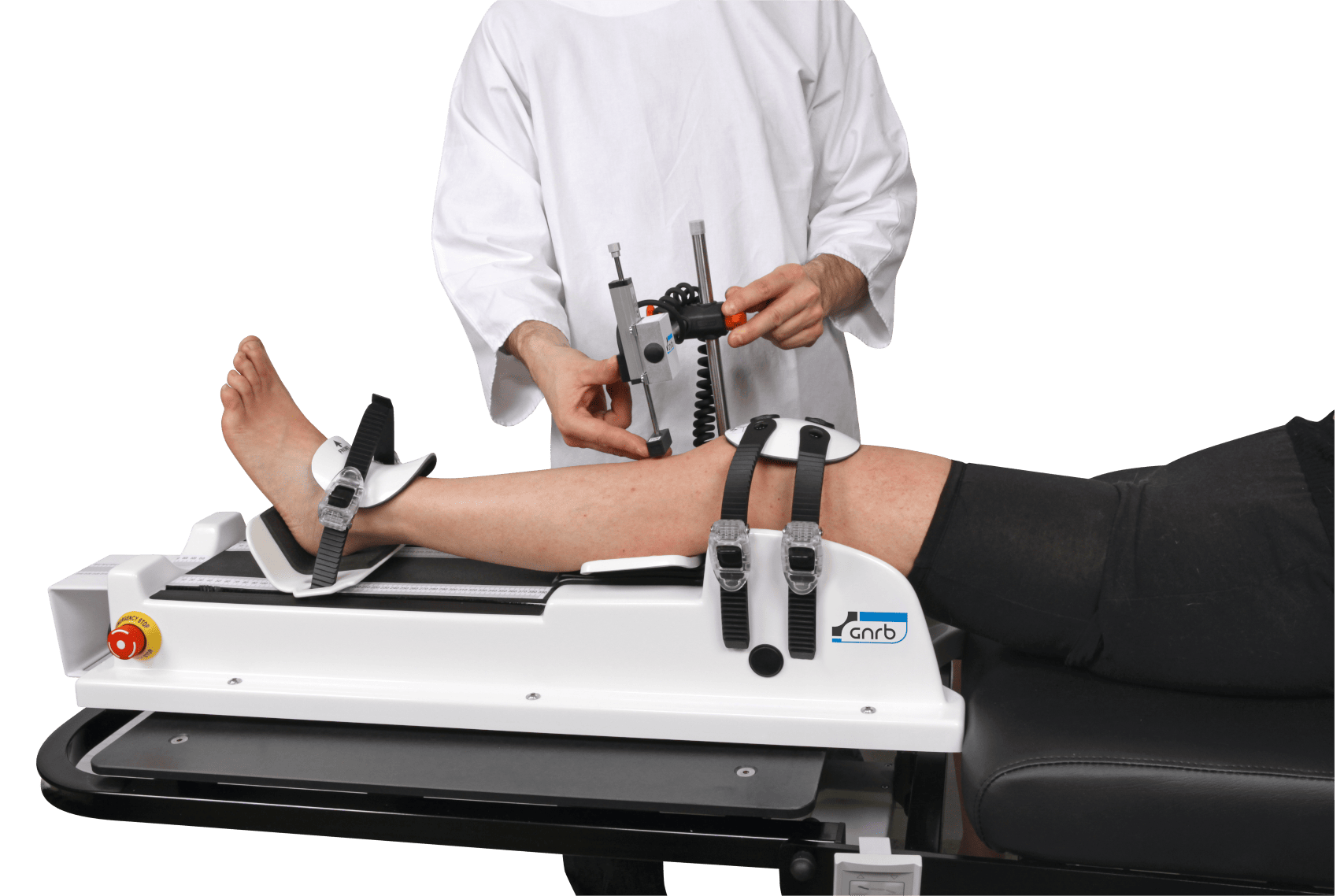

Choosing between manual and objective stability tests is rarely about “which is best” and almost always about what clinical question you are trying to answer. In day-to-day practice, Lachman, pivot shift, and instrumented measurements all assess ACL function, but they probe different biomechanics and fail in different ways. This comparison explains how to use Lachman vs pivot shift vs arthrometer strategically when you need clinical decision support, including where instrumented ACL laxity testing can clarify side-to-side asymmetry, guarding, and borderline cases. The goal is not to replace clinician judgment or imaging, but to build a more reproducible, defensible ligament assessment that fits your patient, setting, and next step (rehab, MRI, surgical opinion, or return-to-sport planning).
1. Lachman vs pivot shift vs arthrometer: what each tool actually “samples”
Although these three options are often grouped together as “ACL tests,” they are not interchangeable. Understanding the mechanical target of each test is the fastest way to choose the right one.
1.1 Lachman: anterior restraint at low flexion
The Lachman test primarily challenges anterior tibial translation (ATT) with the knee in relative extension, where hamstring guarding, patient apprehension, and examiner technique can strongly influence perceived endpoint. If you want a technique refresher or nuanced interpretation, see the Lachman guide.
Clinical relevance: Lachman is often the first-line bedside screen in acute injury because it is quick, requires no equipment, and can be performed when swelling and pain make other maneuvers difficult. The limitation is that it is an examiner-dependent estimate of translation and endpoint quality.
1.2 Pivot shift: coupled translation and rotation under dynamic load
Pivot shift assesses a dynamic phenomenon that reflects not only ACL deficiency but also the interaction of lateral compartment anatomy, anterolateral restraints, and neuromuscular control. It is therefore central to discussions about rotational instability. For practical grading context, see the pivot shift resource.
Clinical relevance: pivot shift can better reflect “giving way” symptoms than static ATT tests, but it is susceptible to guarding and has known challenges around consistent grading.
1.3 Instrumented testing: quantifying translation and side-to-side asymmetry
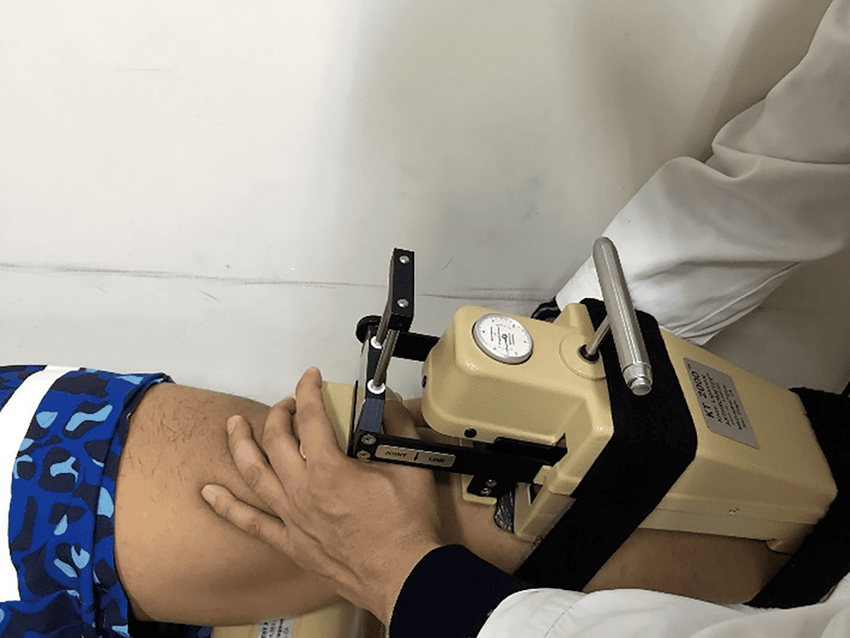
Instrumented devices aim to quantify ATT under standardized conditions, supporting objective knee laxity assessment and follow-up over time. Unlike pivot shift, these systems usually target sagittal-plane translation rather than a full coupled rotation event, but the payoff is measurement reproducibility and a clear side-to-side signal.
If you need a structured way to combine manual and objective data rather than treating them as competing modalities, use this exam framework.
This is where Lachman vs pivot shift vs arthrometer becomes a practical question: do you need a quick bedside screen, a dynamic rotational phenomenon, or a number you can trend and defend?
2. Diagnostic performance, reliability, and the real-world pitfalls
In clinic, “accuracy” is often limited less by the test concept and more by execution conditions: pain, effusion, patient size, time since injury, and examiner variability.
2.1 Manual tests: what matters beyond the maneuver
For Lachman, clinicians often ask about Lachman test sensitivity specificity. Even when a maneuver is generally considered sensitive, practical performance can drop in the presence of swelling, protective hamstring activity, or inconsistent tibial positioning. A key clinical message is that a “negative” manual test in a guarded acute knee is not the same as a confidently normal ACL.
Pivot shift faces a different problem: pivot shift grading reliability. Many clinicians can agree a pivot shift exists, but agreement on grade, and consistency across visits or clinicians, is harder, especially without anesthesia or standardized capture methods. That does not make the test less valuable; it simply means the result should be integrated with the full story, not treated as a stand-alone gatekeeper.
2.2 Guarding and hamstrings: why your “translation” may not be purely ligament-driven
One underappreciated confounder is the patient’s hamstring behavior. Mouhli et al. (2024) highlights that hamstring stiffness can influence anterior tibial translation after ACL rupture, reinforcing a practical point: observed ATT can be partly “muscle-mediated,” not only “ligament-mediated.”
Implication: when you compare Lachman vs pivot shift vs arthrometer, recognize that each method has different vulnerability to neuromuscular tone and patient apprehension. This is also why repeating the exam after analgesia, aspiration (where appropriate), or at a follow-up visit can change the picture.
2.3 Instrumented measures: reproducibility depends on protocol
Instrumented testing reduces some examiner subjectivity, but reliability still depends on patient positioning, fixation, and operator standardization. A relevant recent contribution is Unal et al. (2024), which evaluated inter- and intra-observer reliability and the learning curve for GNRB use, supporting the idea that training and protocol discipline are essential for consistent numbers.
If you are choosing Lachman vs pivot shift vs arthrometer primarily to improve consistency across clinicians or across time, the device helps most when the clinic commits to a repeatable method and reporting format.
3. Clinical decision comparison: which tool to use, when, and why
Below is a scenario-driven comparison oriented to the decisions clinicians actually face: triage, rehab direction, MRI timing, referral, and post-treatment monitoring.
3.1 Acute ACL suspicion (pain, effusion, apprehension)
- Most useful first step: Lachman (quick screen), plus careful history and assessment of effusion and end-feel.
- Common failure mode: guarding or poor relaxation produces a falsely “firm” endpoint or underestimated translation.
- Where objective numbers help: if the exam is equivocal or the patient cannot relax, a quantified side-to-side approach may add confidence, provided the patient tolerates the procedure.
In this setting, Lachman vs pivot shift vs arthrometer often resolves into a sequencing issue: start simple (manual), then escalate to objective quantification if uncertainty remains.
3.2 Suspected rotational instability or “giving way” complaints
- Most discriminating clinical sign: pivot shift, because it relates to a dynamic instability event.
- Common failure mode: poor tolerance without anesthesia and variability in grading.
- Practical integration: use pivot shift to characterize the phenomenon, then quantify sagittal laxity separately when needed for documentation or monitoring.
Rotational symptoms are where Lachman vs pivot shift vs arthrometer should not be framed as “either-or.” Pivot shift informs the rotational story; objective translation helps quantify the sagittal component and side-to-side asymmetry.
3.3 Borderline cases, partial tears, and “discordant” imaging
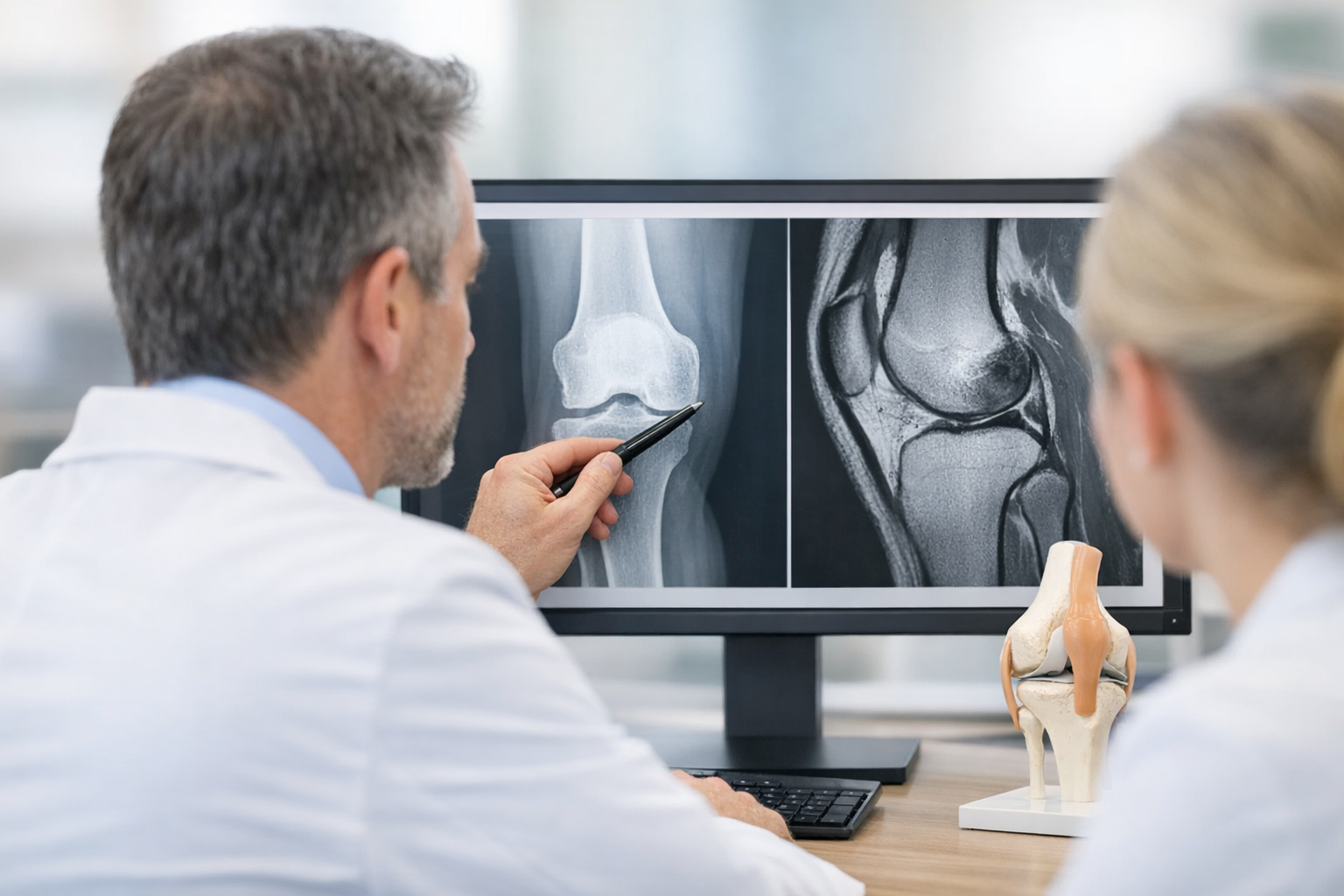
When imaging and exam do not match, clinicians often need to decide whether to reassure and rehabilitate, repeat assessment, or expedite specialist review. Objective laxity measurement can sometimes clarify functional instability in suspected partial ACL tears or equivocal imaging, but it should be positioned as complementary because MRI remains important for meniscus, cartilage, bone bruising, and surgical planning when reconstruction is considered. For a balanced perspective on combined pathways, see MRI integration.
Key metric concept: side-to-side difference ACL is often more clinically interpretable than a raw translation number, because it partially normalizes for patient size and baseline laxity.
3.4 A short decision aid you can use in clinic
- Define the question: “ACL present?” “How unstable?” “Rotational phenomenon?” “Baseline for monitoring?”
- Start with manual: Lachman for ATT and endpoint, pivot shift for rotational event if tolerated.
- Escalate to objective measurement when (a) manual tests are equivocal, (b) you need documentation, (c) you need longitudinal comparability, or (d) you are aligning objective stability with rehab and return-to-sport metrics.
- Use MRI selectively but appropriately to characterize associated injuries and to support operative decision-making when indicated.
Used this way, Lachman vs pivot shift vs arthrometer becomes a structured pathway rather than a debate.
4. Instrumented laxity testing in practice: where GNRB and Dyneelax can fit
Instrumented testing is most useful when you need objective knee laxity assessment that can be repeated and compared, particularly in multi-clinician environments, research protocols, or return-to-sport pathways. The emphasis is not on replacing imaging or clinical skill, but on adding standardized quantification to your ligament assessment.
At a concepts level, it helps to align your clinic on which outputs you will record (for example, side-to-side comparisons at defined loads, or curve-based features) and how you will report them in the medical record.
4.1 What “objective” typically means for ACL laxity devices
- Standardized loading: controlled anteriorly directed force with measured translation response.
- Comparison logic: injured vs contralateral limb to interpret asymmetry (your side-to-side difference).
- Curve shape information: not just a single endpoint, but the translation response across loading, supporting dynamic anterior tibial translation measurement in a structured way.
In this context, clinicians often search for GNRB arthrometer studies and evidence about operator consistency. The learning curve matters: practical implementation guidance is outlined in GNRB learning curve, and the reliability theme is also supported by Unal et al. (2024).
4.2 Using GNRB and Dyneelax responsibly in a clinical pathway
If you are evaluating instrument choice, start by defining your clinical use case (triage, documentation, follow-up, research) and then consider practical constraints (time, training, tolerability, and reporting). For device background pages, see GNRB arthrometer and Dyneelax arthrometer.
Two additional evidence-facing considerations commonly arise:
- Pattern recognition in subgroups: instrumented measures may help detect clinically relevant laxity patterns in ACL-deficient knees with concomitant pathology. A practical example of how quantified laxity can vary by associated injury is discussed in this GNRB meniscal tear study summary.
- Validation and reliability claims: teams often look for Dyneelax arthrometer validation and reliability evidence before adopting any tool. A starting point is the clinic-facing summary on Dyneelax reliability.
When you frame Lachman vs pivot shift vs arthrometer inside an evidence-aware workflow, the arthrometer’s role is typically: quantify sagittal laxity, reduce ambiguity in equivocal exams, and provide a baseline for monitoring, while MRI remains complementary for tissue-level diagnosis and associated injuries.
4.3 Interpreting numbers without overpromising
Avoid treating any single threshold as universal. The clinically responsible approach is to interpret the measurement alongside symptoms, sport demands, time from injury, and concomitant injuries. If you are comparing devices and reporting formats, a practical overview is included in the 2025 comparative analysis of KT-1000 and alternatives.
Finally, objective stability can support return-to-sport decisions when integrated with function and strength testing. For one way to connect measurement to progression criteria, see return-to-sport criteria.
5. Key takeaways and next steps (clinic-ready)
Use each tool for what it does best, and document the reason you chose it. In most real clinics, the winning approach is not picking one test forever, but combining them intelligently.
- Lachman is a fast, practical ATT screen, but it is vulnerable to guarding and technique variability.
- Pivot shift best captures the dynamic rotational event patients describe, but grading consistency can be challenging without standardization.
- Instrumented measurement supports reproducibility and longitudinal tracking, especially when you need documentation or research-grade comparability.
Next steps: define your clinic’s minimum ligament dataset (manual tests, patient-reported instability, and an objective measure where appropriate), set a standard reporting template, and ensure decisions remain clinician-led with MRI used when indicated for associated injuries and operative planning. Done well, Lachman vs pivot shift vs arthrometer becomes a rational workflow that improves clarity for patients, referrers, and multidisciplinary teams.
Clinical references (PubMed)
1) 2024 – Mouhli et al. – Influence of hamstring stiffness on anterior tibial translation after anterior cruciate ligament rupture. – Knee – DOI: 10.1016/j.knee.2024.02.002 – PMID: 38394991 – PubMed
2) 2024 – Unal et al. – GNRB® Knee Arthrometer: Inter- and Intra-observer Reliability and Learning Curve. – Cureus – DOI: 10.7759/cureus.70838 – PMID: 39493172 – PubMed
3) 2024 – Mouhli et al. – Influence of hamstring stiffness on anterior tibial translation after anterior cruciate ligament rupture. – Knee – DOI: 10.1016/j.knee.2024.02.002 – PMID: 38394991 – PubMed
4) 2024 – Unal et al. – GNRB® Knee Arthrometer: Inter- and Intra-observer Reliability and Learning Curve. – Cureus – DOI: 10.7759/cureus.70838 – PMID: 39493172 – PubMed
5) 2024 – Mouhli et al. – Influence of hamstring stiffness on anterior tibial translation after anterior cruciate ligament rupture. – Knee – DOI: 10.1016/j.knee.2024.02.002 – PMID: 38394991 – PubMed