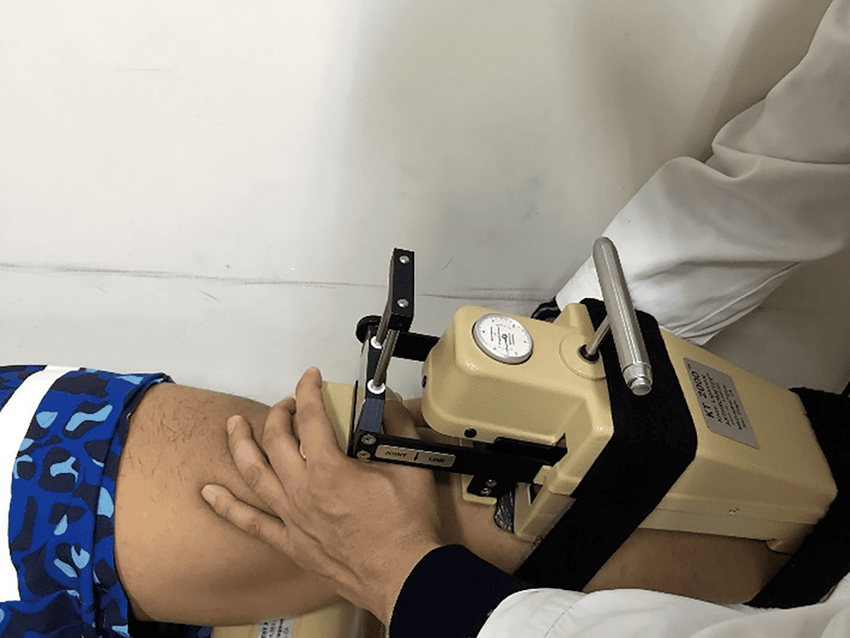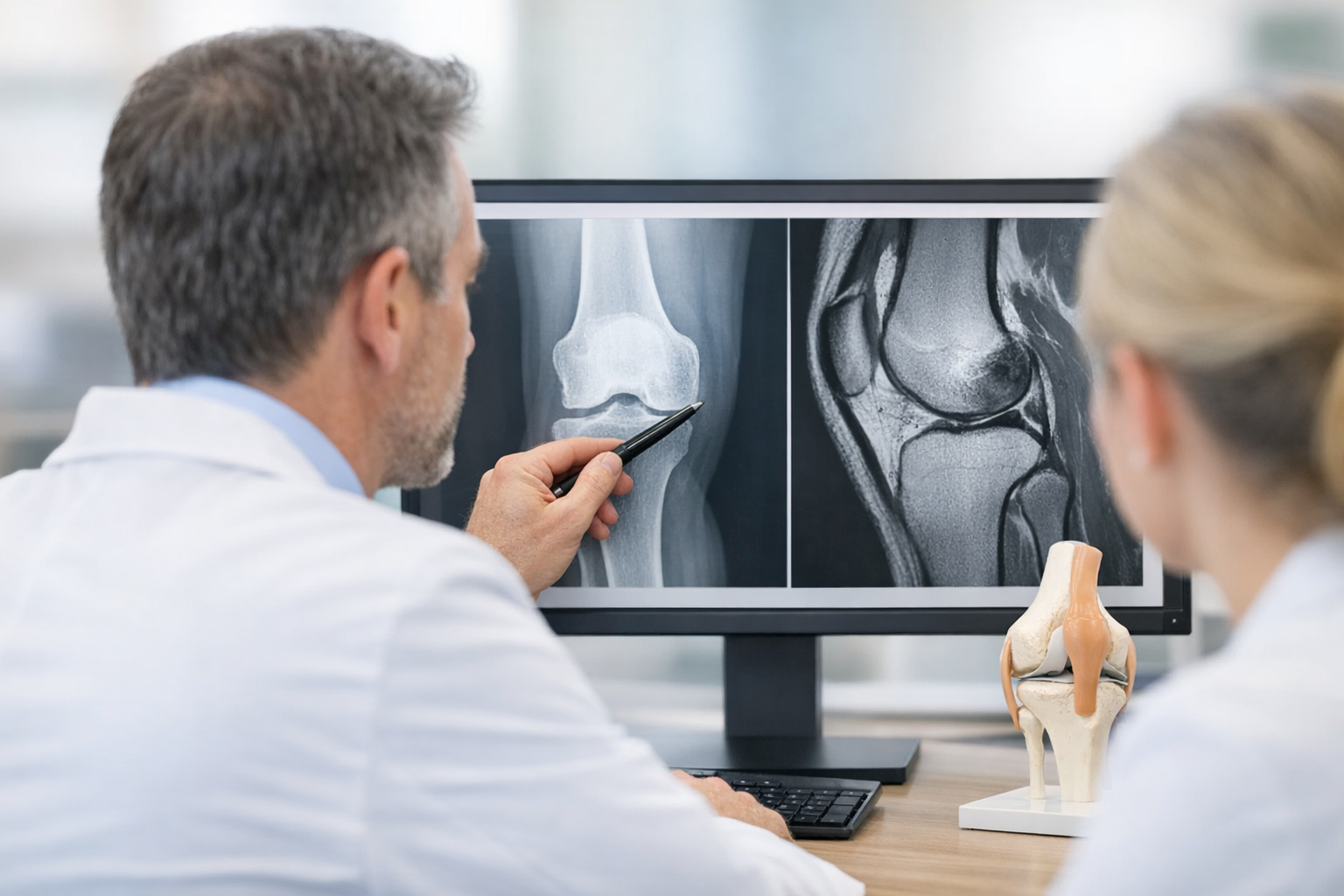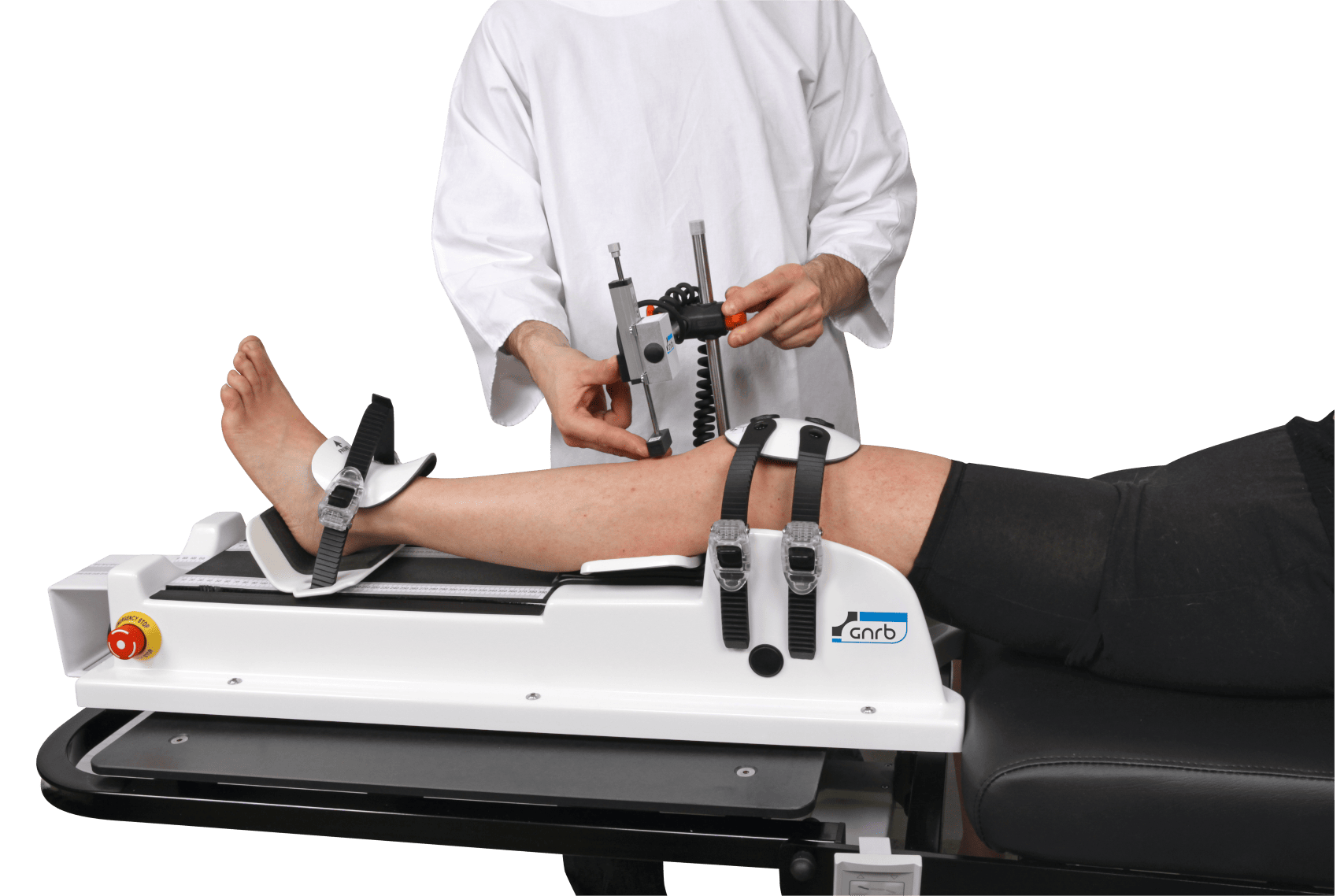

Side-to-side knee laxity is one of the most practical objective metrics in knee ligament assessment because it helps quantify asymmetry rather than relying only on a single absolute number. In ACL-deficient, reconstructed, or borderline cases, the difference between knees can help frame the significance of anterior tibial translation, guide further workup, and support treatment decisions. But the number is not the whole story. Two patients can show a similar side-to-side difference while having very different ligament behavior under load. That is where compliance, stiffness, and the shape of the load response become clinically useful, especially when combined with history, examination, and imaging.
1. Why side-to-side knee laxity remains central in ligament assessment
The reason clinicians return to side-to-side comparison is simple: knees vary. Native laxity is influenced by anatomy, sex, age, hypermobility, muscle guarding, prior injury, and testing conditions. A raw displacement value from one knee can be difficult to interpret in isolation. A contralateral knee comparison helps normalize that variability and often gives a more clinically meaningful signal.
In suspected ACL injury, this matters because the same amount of anterior displacement may be pathological in one patient yet close to baseline in another. knee laxity is therefore best understood as a context-dependent measure, not a standalone diagnosis.
For that reason, side-to-side knee laxity is commonly integrated with Lachman findings, pivot shift, patient symptoms, and MRI. It may help clarify whether perceived looseness reflects a true functional asymmetry or just normal constitutional laxity. It may also help in follow-up after reconstruction when concern exists for graft elongation, residual instability, or progression in a partial tear.
However, side-to-side knee laxity should not be treated as the only decision point. Meniscal injury, bony morphology, muscular compensation, and rotational control can all alter how instability presents clinically. This is why an objective knee exam should combine asymmetry metrics with the broader examination.
2. How to interpret the number without overinterpreting it
The clinical appeal of side-to-side knee laxity is that it turns a vague concept into a measurable difference. But interpretation depends on several variables:
- Load applied during testing
- Patient relaxation and hamstring guarding
- Knee flexion angle and starting position
- Device or method used
- Associated lesions, especially meniscal and capsuloligamentous injury
This is why a reported ACL laxity threshold should always be read in the context of the testing protocol rather than copied across devices or clinics as a universal rule. Different tools and force levels can produce different displacement values, even in the same patient.
A practical reading of side-to-side knee laxity asks four questions:
- Is the asymmetry reproducible?
- At what load does the difference emerge?
- Does it match the history and manual exam?
- Does MRI explain associated pathology that may influence the finding?
In equivocal presentations, this kind of structured interpretation can be more useful than asking whether the knee is simply “stable” or “unstable.” A broader review of objective testing helps frame these measurement basics.
Evidence also supports caution in assuming that anterior laxity reflects only the ACL itself. In Huang et al. (2025), anterior knee laxity in ACL-deficient patients was evaluated in relation to concomitant meniscal tear, tibial slope, and static knee position. That is clinically relevant because it reinforces that side-to-side knee laxity may be influenced by more than a single torn structure.
Similarly, Mouhli et al. (2024) examined the influence of hamstring stiffness on anterior tibial translation after ACL rupture. This matters in daily practice because muscular stiffness and guarding may alter measured displacement, especially when the patient is apprehensive or not fully relaxed.
3. Why ligament compliance adds insight beyond side-to-side difference
A side-to-side difference tells you how much displacement differs. Compliance and stiffness help explain how the knee reaches that displacement. This distinction is clinically important.
Two knees may show similar side-to-side knee laxity, but one may have a steep resistance profile and the other a more progressive, compliant response. Those patterns can imply different tissue behavior, different functional risk, or different phases of graft or ligament compromise. A force-displacement curve knee assessment helps reveal that behavior under increasing load.
In other words, a displacement value is only one point on the curve. Ligament compliance measurement and knee stiffness assessment describe the mechanical response across loading, which may be particularly useful in partial tears, postoperative follow-up, and fatigue-related changes.
This is the main limitation of relying on side-to-side knee laxity alone. If two patients both show asymmetry, but one has early give with low resistance and the other has delayed but abrupt translation, the clinical interpretation may differ. A deeper discussion of this concept appears in compliance.
Nuccio et al. (2021) is especially relevant here. In players returning to sport within 12 months after ACL reconstruction, the authors reported altered knee laxity and stiffness responses after a soccer match simulation. The practical implication is that dynamic knee laxity and stiffness behavior may change with fatigue or load exposure even when a single baseline value looks acceptable.
That does not mean compliance metrics replace standard asymmetry measures. It means they may complement side-to-side knee laxity by identifying patterns that a simple differential number can miss.
3.1 A simple clinical interpretation model
When reading results, think in layers:
- Layer 1: Is there measurable side-to-side knee laxity?
- Layer 2: Is the translation pattern gradual, abrupt, or load-dependent?
- Layer 3: Does the compliance profile fit the symptoms, pivot shift, and MRI?
This layered model often improves clinical reasoning more than a single pass-fail threshold.
4. Side-to-side knee laxity and rotational instability are related but not interchangeable
One of the most common pitfalls is to treat sagittal asymmetry as a complete surrogate for rotational control. It is not. side-to-side knee laxity usually reflects anterior translation asymmetry, but the patient may still have significant rotational instability, especially in the presence of anterolateral complex injury, lateral meniscal deficiency, or pivoting symptoms.
This is why a positive pivot shift can remain clinically important even when measured anterior asymmetry appears only moderate. Conversely, increased anterior displacement does not always predict the same degree of subjective giving way during cutting or deceleration tasks.
Frigout et al. (2024) looked at whether lateral extra-articular tenodesis plays a role in control of sagittal knee laxity after ACL reconstruction with short hamstring tendon grafts. For clinicians, the study highlights a useful principle: procedures primarily considered in the context of rotational control may also influence measurable sagittal laxity outcomes, reinforcing that planes of instability can interact.
In practice, side-to-side knee laxity should therefore be read alongside pivot shift grade, patient-reported giving way, and sport-specific demands. If rotational symptoms dominate, a sagittal asymmetry number alone may understate the problem. More advanced dynamic testing may add context when single-axis findings and clinical symptoms do not align.
For clinicians assessing return to pivoting sport, this matters because acceptable side-to-side knee laxity does not automatically mean the knee is ready for high-demand rotation, contact, or deceleration exposure.
5. Where instrumented testing fits in modern practice
Instrumented laxity testing can help standardize side-to-side assessment by reducing some of the subjectivity inherent to manual examination alone. It does not replace clinician judgment, and it does not replace MRI. Rather, it may complement MRI by quantifying functional instability, especially when the history, physical examination, and imaging are not fully aligned.
This is particularly relevant in suspected partial ACL tears, postoperative monitoring, and borderline MRI cases. In those settings, objective measurement may help quantify side-to-side knee laxity and characterize loading behavior that static imaging may not fully capture. MRI remains complementary and is typically needed to evaluate meniscal, cartilage, and bone injury, as well as for preoperative planning when reconstruction is being considered. In cases where imaging findings and symptoms diverge, borderline MRI workflows often benefit from this combined approach.
In clinics that use robotic or instrumented systems, devices such as the GNRB arthrometer and Dyneelax arthrometer may help capture not only displacement asymmetry but also load-response features relevant to compliance and stiffness.
This can be useful when a clinician wants more than a yes-no answer. For example, persistent symptoms after ACL reconstruction may reflect stretching rather than frank failure, and serial objective measurements may support that distinction. See this discussion on graft stretch for that clinical scenario. For readers wanting historical context on arthrometer-based asymmetry, the KT-1000 model remains a familiar reference point.
Abram et al. (2026) also reminds us that objective laxity outcomes can be used to compare technical reconstruction variables over time. The value is not only diagnostic. It can also be longitudinal and comparative.
5.1 Practical decision aid
Consider objective measurement when:
- Manual findings are subtle or examiner-dependent
- MRI is equivocal but symptoms suggest instability
- You need serial follow-up after reconstruction
- Return-to-sport progression depends on measurable stability
- There is concern for mismatch between symptoms and routine exam
6. Using side-to-side knee laxity in rehab and return-to-sport decisions
One of the strongest uses of side-to-side knee laxity is not only diagnosis, but follow-up. Stability is not binary, and progress should not be judged by time from surgery alone. Objective asymmetry can add a useful checkpoint when symptoms are improving yet confidence, cutting tolerance, or pivot control remain uncertain.
This matters in rehabilitation because patients can restore strength and hop distance while still showing residual mechanical asymmetry. On the other hand, a patient with mild persistent side-to-side knee laxity may function well if rotational control, neuromuscular performance, and symptom response are appropriate. Interpretation should therefore remain multidimensional.
A practical return-to-sport framework might include:
- Symptoms and effusion status
- Strength and power testing
- Movement quality and deceleration control
- side-to-side knee laxity and, when available, compliance behavior
- Sport-specific exposure tolerance
That approach is more robust than using a calendar date alone. Articles on rehab milestones and return-to-sport expand on how objective stability can support these decisions.
In day-to-day care, side-to-side knee laxity becomes most useful when tracked over time rather than viewed as a single isolated datapoint. A stable asymmetry profile may mean one thing; a progressive increase, or a change in compliance at the same displacement, may mean another.
7. Key takeaways and next steps
side-to-side knee laxity matters because it gives clinicians a practical, patient-specific measure of asymmetry. It is especially useful in ACL assessment, postoperative follow-up, and cases where symptoms, manual testing, and imaging do not perfectly match.
But the number should not be read in isolation. Ligament compliance measurement, knee stiffness assessment, rotational findings, and associated pathology all affect interpretation. A patient with the same measured asymmetry can have a very different mechanical profile and very different functional risk.
The most clinically responsible approach is to combine side-to-side knee laxity with history, examination, MRI, and where appropriate, standardized instrumented testing. Used that way, the metric can sharpen decision-making without oversimplifying complex instability patterns.
If the case is borderline, think in sequence: quantify asymmetry, assess the load-response pattern, correlate with pivot shift and symptoms, then integrate MRI for associated injury and treatment planning. That is usually where side-to-side knee laxity becomes most valuable.
Clinical references (PubMed)
1) 2024 – Frigout et al. – Do lateral extra-articular tenodeses play a role in the control of sagittal knee laxity in short hamstring tendon graft ACL reconstruction? A retrospective study of 80 cases with and without tenodesis. – Orthop Traumatol Surg Res – DOI: 10.1016/j.otsr.2023.103656 – PMID: 37451340 – PubMed
2) 2025 – Huang et al. – The Association Between Concomitant Meniscal Tear, Tibial Slope, Static Knee Position, and Anterior Knee Laxity in ACL-Deficient Patients. – Orthop J Sports Med – DOI: 10.1177/23259671251324186 – PMID: 40124192 – PubMed
3) 2021 – Nuccio et al. – Altered Knee Laxity and Stiffness in Response to a Soccer Match Simulation in Players Returning to Sport Within 12 Months After Anterior Cruciate Ligament Reconstruction. – Am J Sports Med – DOI: 10.1177/03635465211013020 – PMID: 34038185 – PubMed
4) 2024 – Mouhli et al. – Influence of hamstring stiffness on anterior tibial translation after anterior cruciate ligament rupture. – Knee – DOI: 10.1016/j.knee.2024.02.002 – PMID: 38394991 – PubMed
5) 2026 – Abram et al. – No Differences in Objective Knee Laxity Measurements or Patient Reported Outcome Measures Between Fixed and Adjustable Loop Suspensory Fixation in Anterior Cruciate Ligament Reconstruction: 1-Year Results from the GAP Study, A Prospective, Double-Blinded, Randomized Trial. – J ISAKOS – DOI: 10.1016/j.jisako.2026.101123 – PMID: 42044694 – PubMed