
Title: knee stability metrics: Practical insight when rehab fails
Slug: rehab-milestones-vs-knee-stability-metrics
Meta Title: Rehab milestones vs knee stability metrics: decision guide
Meta Description: When hop tests and strength pass but laxity persists, interpret knee stability metrics with context: translation, pivot shift, and graft maturation.
Focus Keyword: knee stability metrics
Delete these META lines after pasting into RankMath.
Rehabilitation milestones often look reassuring: swelling settles, ROM normalizes, hop tests improve, and patients “feel ready.” Yet knee stability metrics can tell a different story, especially when clinicians are applying ACL return to sport criteria. This mismatch is not just a measurement problem. It can reflect graft biology, rotational control deficits, neuromuscular inhibition, or multi-ligament patterns that a straight-line functional test does not stress. The risk is binary thinking: treating either milestone checklists or instrumented stability data as the single truth. A safer approach is to interpret both, decide what the mismatch likely represents, and choose targeted re-testing and progression criteria that match the patient’s mechanism of instability.
I. Why rehab milestones and knee stability metrics diverge
A) Milestones are capability snapshots, not instability provocation
Most milestones reward capacity: ROM, effusion control, tolerance to load, and task completion. Many of these tasks are performed in controlled planes and predictable environments. Instability events (giving way, apprehension in deceleration, cutting) are different: they require rapid sensorimotor responses under rotational and multiplanar loads.
That is why a patient can “pass” a clinic session while still showing concerning knee stability metrics on side-to-side testing, or why a patient with excellent translation numbers may still fail to trust the knee.
B) Time-based expectations can mask biologic variability
Timelines are useful for planning, but they are not uniform biology. Two patients at the same post-op week can have different swelling patterns, quadriceps inhibition, and graft maturation signals. If you need a shared language for what is commonly expected at each stage, compare findings against a structured rehab timeline such as torn ACL recovery time milestones and a broader framework like this ACL reconstruction diagnosis and recovery guide, then anchor decisions in objective re-assessment rather than calendar dates.
C) Different constructs are being tested
Symptoms and performance can be driven by pain, effusion, proprioception, fear, or compensations even when laxity is modest. Conversely, laxity can increase without immediate symptoms. If you want a concise refresher on these constructs, this explainer on what knee laxity is and why symptoms may not match is a helpful starting point.
II. How to interpret knee stability metrics when function and laxity disagree
A) What “stability” usually means in clinic and lab
In most pathways, knee stability metrics center on translation and rotation, measured clinically (Lachman, anterior drawer, pivot shift) and instrumentally (arthrometers, robotic devices). The goal is not to “win” against functional testing, but to add resolution: quantify side-to-side differences, characterize end-feel, and track change over time.
For a pragmatic overview of methods, indications, and limitations, review knee laxity testing and the broader concept of an objective knee examination in orthopaedics.
B) Translational measures: what to capture and what to avoid over-reading
Key translational outputs often include an anterior tibial translation measurement (absolute and relative) and the side-to-side difference knee laxity compared with the contralateral limb. These help you answer: “Is this knee mechanically looser today than it should be for this patient, at this stage, relative to itself?”
Interpretation pitfalls:
- Guarding and hamstring co-contraction can artificially lower measured translation.
- Effusion and pain can reduce voluntary relaxation, changing repeatability.
- Contralateral “normal” may not be normal if there is prior injury or generalized laxity.
- Single-point measures may miss load-response behavior (how translation changes across forces).
C) Performance tests can conflict with laxity data for valid reasons
Clinicians commonly face the “functional hop test versus laxity” dilemma. Hop distance and landing mechanics reflect strength, coordination, and confidence, but do not necessarily stress the ACL in the same way as unanticipated cutting or pivoting. In the opposite direction, a patient may test “loose” yet hop well because they have learned high-level co-contraction strategies that mask symptoms in simple tasks.
Strength symmetry can also mislead if the metric is treated as a finish line rather than a risk context. A quadriceps strength limb symmetry index can look acceptable even when absolute torque is low for sport demands, rate of force development is impaired, or the athlete is relying on hip strategies.
D) A brief decision aid for mismatched findings
When knee stability metrics and functional milestones conflict, a useful way to think about it is to decide whether you are dealing with (1) measurement noise, (2) mechanical laxity, (3) neuromuscular control limitations, or (4) a pattern mismatch (rotational or multi-ligament).
- Confirm repeatability: repeat on the same day and at a later session when pain and effusion are controlled; document examiner, device, load, and patient relaxation.
- Localize the instability: translation-dominant, rotation-dominant, or combined; align with Lachman and pivot shift.
- Stress the relevant task: add deceleration, perturbation, and unanticipated direction-change progressions (with appropriate safety).
- Escalate imaging or specialist review if multi-ligament signs, recurrent giving way, locked knee, or suspected meniscal/cartilage injury are present. Objective testing complements, not replaces, MRI and clinical examination.
Finally, remember that laxity is not the only mechanical construct. In some cases, knee stability metrics based on stiffness or compliance may explain function better than a single translation value. For a deeper discussion, see why ACL compliance and stiffness can outperform laxity when laxity and function do not line up.
III. Divergence patterns that matter clinically (and what they may imply)
A) “Doing great” functionally, but laxity is higher than expected
This pattern raises questions about mechanical restraint, graft protection, and how the athlete is “passing” tasks. Potential contributors include technique compensation, limited exposure to high-risk maneuvers, or true increases in translation under standardized loads. It is also where careful programming of open-chain work comes up frequently. In a cohort design examining early open kinetic chain exercise, Forelli et al. (2023) specifically evaluated the relationship between muscle strength and graft laxity after ACL reconstruction, illustrating why clinicians often want objective tracking rather than assumptions.
B) “Stable numbers,” but the athlete will not progress (or reports giving way)
This mismatch is commonly driven by factors that translation tests do not capture well: rate-of-force deficits, impaired proprioception, fatigue sensitivity, pain flares, or psychological readiness. If occupational or daily load is high, it may also alter symptoms and perceived capacity without necessarily changing measured laxity. At 12 months, Kirby et al. (2023) highlighted how occupation can influence outcomes after ACL reconstruction, reinforcing that context matters when interpreting knee stability metrics against performance and PROs.
C) Early post-op imaging and biology can shift the story
Rehab milestones can advance while graft tissue properties are still evolving. Imaging markers and tunnel or graft maturation signals may change during the first year, and they may or may not correlate with measured laxity for a given individual. If you are monitoring early changes, this research discussion connecting quantitative MRI UTE-T2 changes and BMI-normalized knee laxity can help frame why objective measures and imaging are complementary rather than redundant. Similarly, Carrozzo et al. (2026) prospectively compared radiologic maturation and tunnel changes across techniques, which is relevant when a patient’s clinical course and knee stability metrics do not evolve as expected.
IV. Rotational instability and multi-ligament patterns: when translation is not the main issue
A) Pivot shift is a functional phenomenon, not just a clinical checkbox
Many athletes describe instability as a pivot, slip, or “shifting” sensation rather than pure anterior translation. That is why pivot shift grading and function matters when rehabilitation milestones look strong but sport-specific confidence is poor. Even when translation appears acceptable, residual rotational laxity can drive apprehension in cutting and deceleration.
Clinically, tie pivot shift interpretation to movement testing and patient-reported episodes, not only to a grade. Documenting pivot shift grading and function alongside structured strength and hop tasks can prevent you from falsely concluding that a “stable Lachman” equals sport-ready stability.
B) Combined restraints and the “hidden” contributors to instability
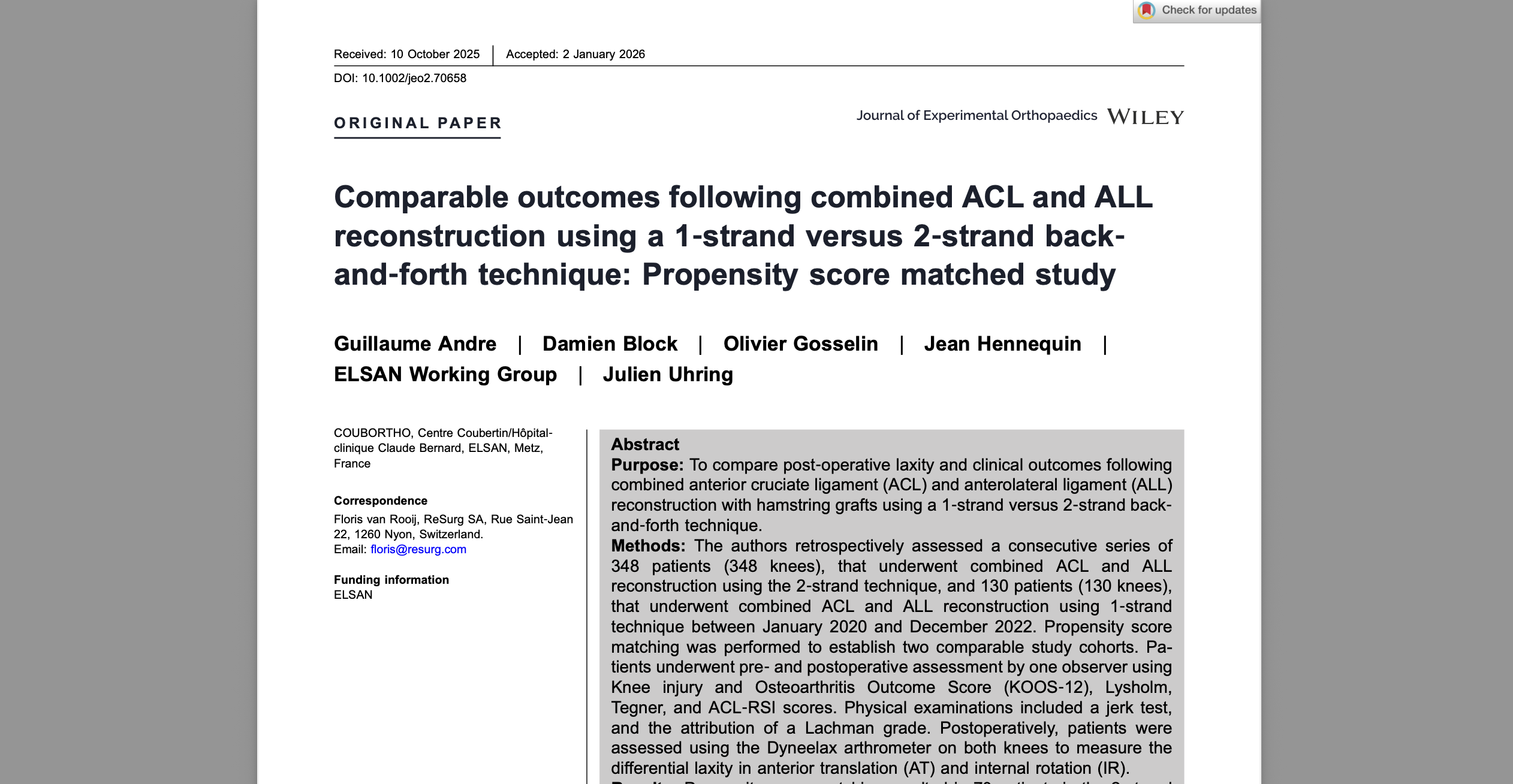
Rotational control involves the ACL plus secondary restraints (anterolateral structures, meniscus, capsule) and neuromuscular control. Surgical strategies may vary depending on pre-injury pivoting demands and exam findings. For example, Jaramillo Quiceno et al. (2026) evaluated combined ACL and anterolateral ligament reconstruction compared with isolated reconstruction, which is clinically relevant when rotational complaints persist despite reasonable translational knee stability metrics.
C) Multi-ligament and posterolateral corner considerations
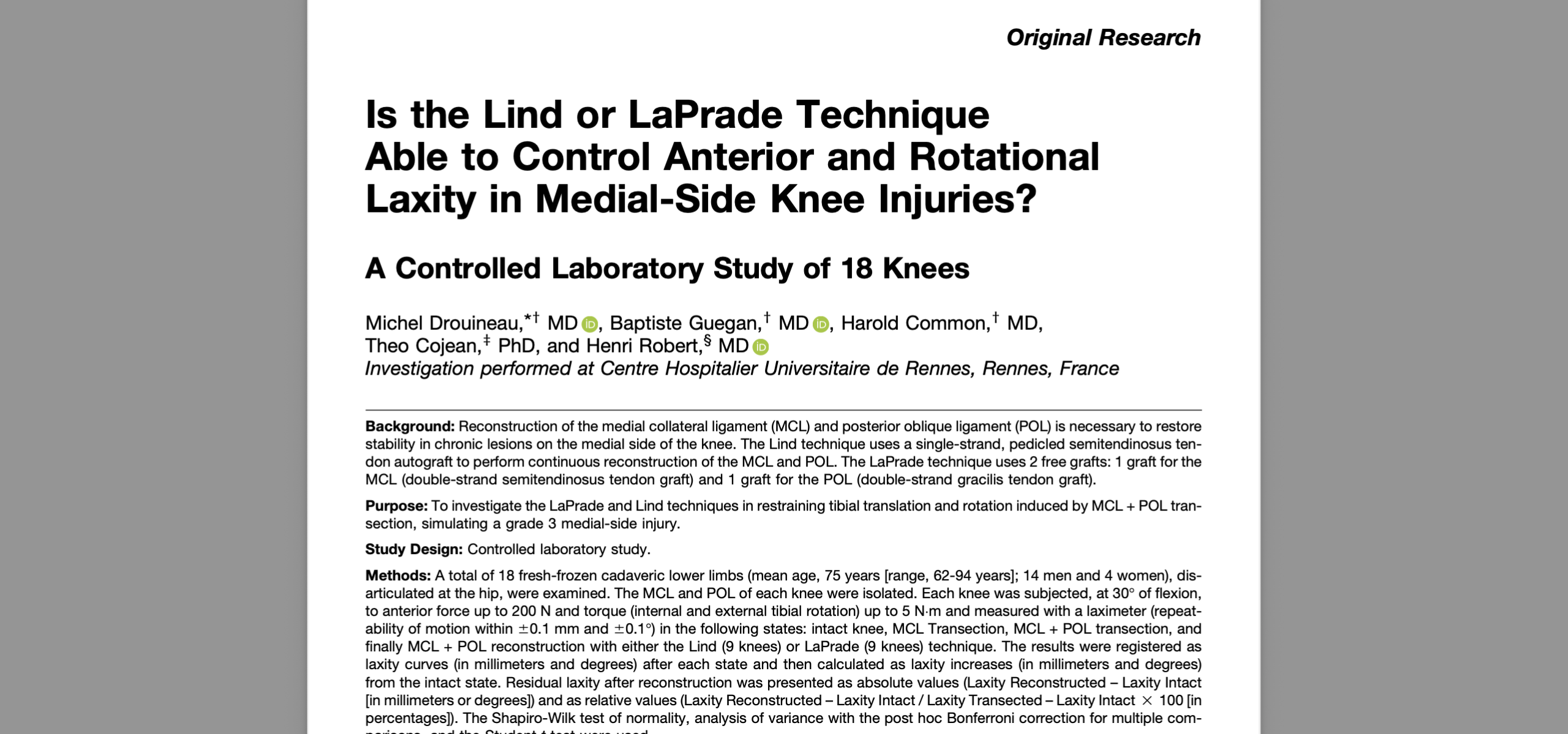
When the injury pattern includes PCL, MCL, LCL, or PLC, “passing” a hop test can be a poor proxy for true readiness, and translation-only metrics are rarely sufficient. In these cases, knee stability metrics should be multi-planar: varus-valgus, posterior translation, and rotation. A low threshold for re-examination and imaging is appropriate if there are recurrent giving-way episodes, varus thrust, or inconsistent end-feels. Objective measures can support decision-making, but diagnosis and treatment remain clinician-led and should incorporate clinical exam, MRI, and the mechanism.
V. Objective knee stability assessment across the pathway
A dedicated objective knee stability assessment strategy can help when milestones and symptoms diverge from knee stability metrics. Instrumented arthrometers can complement MRI and clinical examination by quantifying side-to-side instability and tracking change over time. Examples include the GNRB ACL assessment approach and devices such as a Dyneelax knee arthrometer, selected based on clinic workflow, reliability, and the ligament pattern.
A) Diagnostic support (especially equivocal or partial-tear scenarios)
In suspected partial ACL tears or borderline MRI cases, objective quantification of translation and dynamic response may clarify whether there is functionally meaningful instability. MRI remains complementary and is typically needed to assess meniscus, cartilage, bone bruising, and for pre-operative planning when reconstruction is considered.
B) Surgical planning (refining the instability phenotype)
Pre-op quantification of translation and rotational surrogates can help refine the functional laxity profile discussed between surgeon and athlete, particularly when pivot symptoms are prominent. This is not a standalone indication tool, but it can add structure to planning and counseling.
C) Post-operative monitoring (tracking stability during graft maturation)
Serial knee stability metrics can help clinicians detect unexpected trends, interpret plateaued function, and contextualize progression, especially when symptoms and performance tests conflict. Rehabilitation also benefits when the measurement tool is repeatable; for example, this summary on Dyneelax reliability in knee ligament injury highlights why reliability matters if you plan to track change longitudinally.
D) Prevention and screening (baseline and risk-aware monitoring)
For at-risk athletes or those with prior injury, baseline objective testing can support individualized monitoring alongside movement quality and strength. It should not be oversold as “injury prediction,” but it may help identify athletes who warrant closer follow-up when other red flags appear.
To add context beyond static anterior translation, consider how dynamic knee testing can complement clinic measures when symptoms occur during real-world loading rather than in a relaxed exam position.
Device and graft choices can also influence early trajectories that clinicians may observe in both milestones and knee stability metrics. For example, Antzoulas et al. (2026) summarized evidence on LARS-augmented hamstring ACL reconstruction versus hamstring autograft alone, which is relevant when interpreting early stability and progression decisions.
VI. Key takeaways and next steps
When rehabilitation milestones and knee stability metrics diverge, the goal is not to choose sides. It is to identify which construct is limiting safe progression.
- Do not equate “passed hop tests” with stability: functional tests can miss rotation-dominant instability and unanticipated demands.
- Do not equate “good translation numbers” with readiness: confidence, AMI, pain, and movement strategy can still drive poor outcomes.
- Use a structured re-assessment plan that includes translation, rotation (pivot shift), symptoms, and task-specific stressors.
- Apply ACL return to sport criteria as a framework, not a binary gate, and explicitly document where the mismatch lies (mechanical vs neuromuscular vs psychological).
If function lags despite acceptable knee stability metrics, address neuromuscular inhibition and fear as real performance constraints. This overview of arthrogenic muscle inhibition (AMI), laxity, and kinesiophobia after ACL reconstruction can help guide targeted interventions and referral decisions.
Finally, keep your risk conversation honest: “passing” one domain does not eliminate risk. Consider documenting known graft failure risk predictors (sport exposure, reinjury history, movement quality, adherence, and context) alongside your objective testing and progression plan.
VII. Clinical references (PubMed)
1) 2023 — Forelli et al. — Evaluation of Muscle Strength and Graft Laxity With Early Open Kinetic Chain Exercise After ACL Reconstruction: A Cohort Study. — Orthop J Sports Med — DOI: 10.1177/23259671231177594 — PMID: 37441511 — PubMed
2) 2026 — Antzoulas et al. — LARS-augmented hamstring ACL reconstruction shows better early but similar long-term outcomes compared with hamstring autograft alone: A systematic review and meta-analysis. — J Exp Orthop — DOI: 10.1002/jeo2.70654 — PMID: 41743308 — PubMed
3) 2026 — Jaramillo Quiceno et al. — Combined anterior cruciate ligament and anterolateral ligament reconstruction using an adjustable-loop device provides similar short-term clinical outcomes compared with isolated reconstruction. — J ISAKOS — DOI: 10.1016/j.jisako.2026.101073 — PMID: 41628858 — PubMed
4) 2023 — Kirby et al. — Impact of Occupation on 12-Month Outcomes After Anterior Cruciate Ligament Reconstruction in Male Patients. — Orthop J Sports Med — DOI: 10.1177/23259671221130377 — PMID: 36846817 — PubMed
5) 2026 — Carrozzo et al. — Radiologic maturation and tunnel changes after all-inside versus standard hamstring ACL reconstruction: a prospective comparative study. — Radiol Med — DOI: 10.1007/s11547-026-02177-1 — PMID: 41722021 — PubMed