Health and Safety Tips

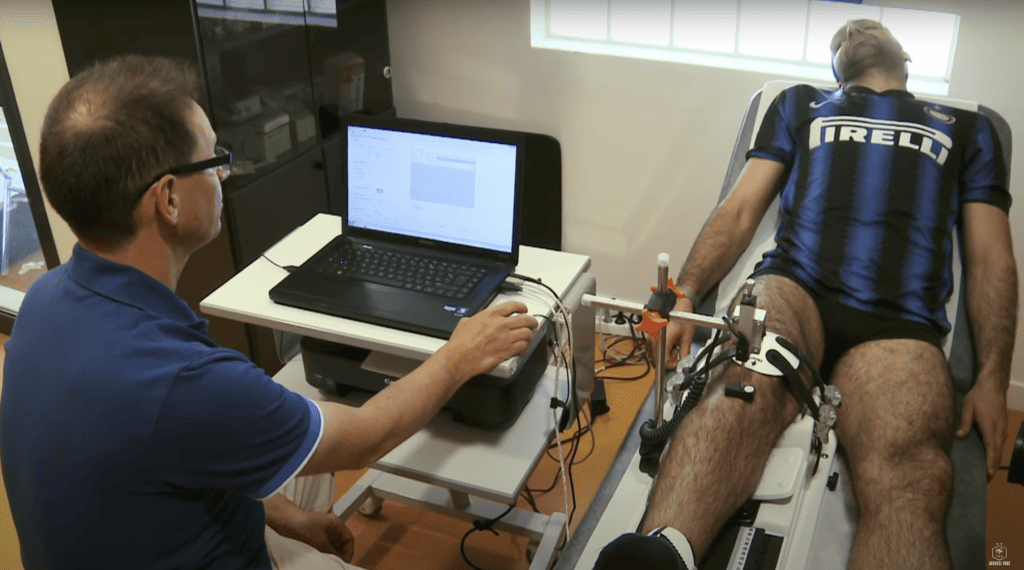
Dedicated to promoting knee health and safety, this category offers valuable information on injury prevention, rehabilitation, and best practices for maintaining knee health, especially for arthrometer users.

football sitting on floor injured

Multi-Ligament Knee Injuries: A Structured Assessment Checklist

Multi-ligament knee injuries are high-stakes because instability patterns can evolve as swelling and guarding change, and because neurovascular compromise can be present even when the joint looks “reduced.” This workflow is designed for multiligament knee injury assessment across ED, urgent care, sports medicine, and physiotherapy handovers, using a practical multiligament knee injury checklist style that […]

Multi-Ligament Knee Injuries: A Structured Assessment Checklist Read More »

knee, partial ACL tear diagnosis

Partial ACL Tears: Why They’re Missed and How to Reduce Diagnostic Uncertainty

Partial ACL injuries are common in pivoting sports, yet partial ACL tear diagnosis remains one of the most inconsistent decisions across orthopaedics, sports medicine, and radiology. The core problem is a mismatch between what patients feel (giving-way, rotational episodes, loss of trust) and what standard tests capture on the day, especially when only a portion

Partial ACL Tears: Why They’re Missed and How to Reduce Diagnostic Uncertainty Read More »

doctors looking at the camera

Graft Stretch vs Graft Failure: Early Signs and How to Investigate

Distinguishing ACL graft stretch vs failure is a common, high-stakes clinical decision after reconstruction because symptoms can look similar while management differs. Athletes may describe giving way, distrust, or a “new normal” instability that can also be driven by pain, swelling, neuromuscular inhibition, or associated meniscal injury. The challenge is to decide whether you are

Graft Stretch vs Graft Failure: Early Signs and How to Investigate Read More »

high-grade pivot shift

High-Grade Pivot Shift: Clinical Meaning and Next Steps

A high-grade pivot shift is not just a “positive ACL test”. It is a clinically meaningful signal that the knee’s rotational knee instability is functionally relevant and may involve more than the intra-articular ACL alone. In day-to-day practice, it can change how you interpret exam findings, how you scrutinize imaging for lateral and posterolateral restraints,

High-Grade Pivot Shift: Clinical Meaning and Next Steps Read More »

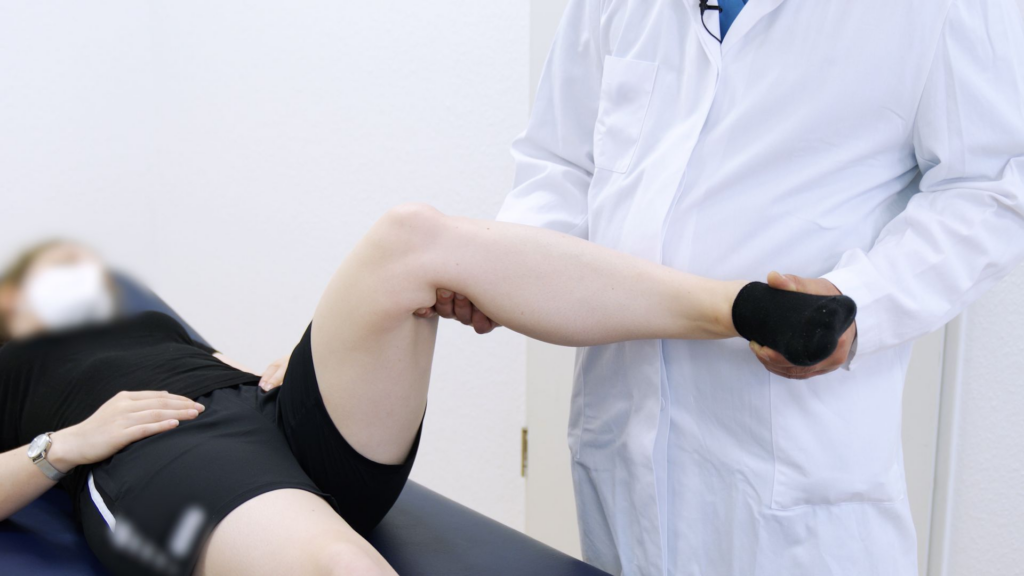
MCL valgus stress test

MCL Injuries: MCL Valgus Stress Testing, Grading, and Monitoring

In acute medial-sided knee pain, the MCL valgus stress test remains a fast, high-yield maneuver to guide triage, imaging, and early bracing decisions, especially when swelling and apprehension limit more complex exams. This workflow focuses on reproducible positioning, interpretation, and documentation so you can translate “opens up a bit” into clinically actionable language such as

MCL Injuries: MCL Valgus Stress Testing, Grading, and Monitoring Read More »

featured 13

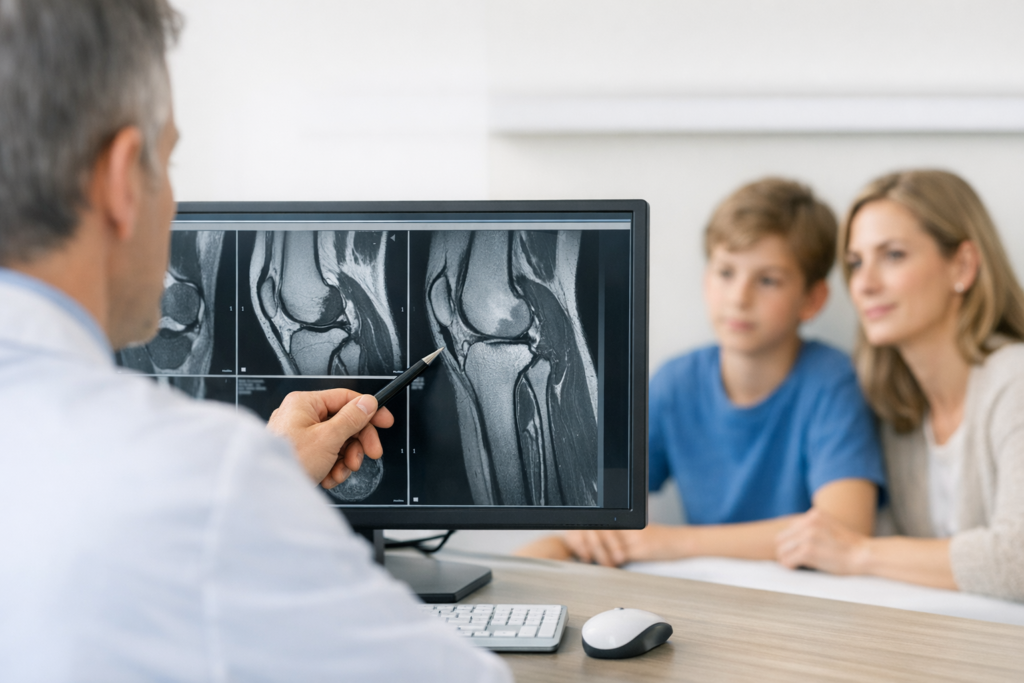
Pediatric ACL injury diagnosis: Critical pitfalls to avoid

Accurate pediatric ACL injury diagnosis is often harder than “small adult ACL” thinking suggests. Pain inhibition, apprehension, variable cooperation, and open physes can all distort the exam, while MRI can be challenged by partial injuries, developmental anatomy, and timing. When the clinical picture is uncertain, the priority is not just labeling a tear, but also

Pediatric ACL injury diagnosis: Critical pitfalls to avoid Read More »

featured 11

Knee stability metrics: Practical insight when rehab fails

Title: knee stability metrics: Practical insight when rehab fails Slug: rehab-milestones-vs-knee-stability-metrics Meta Title: Rehab milestones vs knee stability metrics: decision guide Meta Description: When hop tests and strength pass but laxity persists, interpret knee stability metrics with context: translation, pivot shift, and graft maturation. Focus Keyword: knee stability metrics Delete these META lines after pasting

Knee stability metrics: Practical insight when rehab fails Read More »

featured 10

Acute Knee Ligament Injury triage in Urgent Care: A Triage Algorithm for Suspected Ligament Injury

Acute knee trauma is common in urgent and emergency settings, but soft tissue injuries are frequently missed when pain, swelling, or limited exam conditions obscure key signs. This workflow is an acute knee injury algorithm designed for rapid risk stratification, safe early management, and consistent documentation, with special attention to suspected ACL and multi-ligament patterns.

Acute Knee Ligament Injury triage in Urgent Care: A Triage Algorithm for Suspected Ligament Injury Read More »

runner

ACL return to sport criteria: Practical safer clearance

Return-to-sport decisions after ACL injury or reconstruction are rarely limited by one variable. Even when an athlete “passes” strength and hop testing, persistent functional instability can remain clinically relevant, particularly for cutting and pivoting sports. Modern ACL return to sport criteria increasingly aim to triangulate performance capacity (strength, hops, movement quality) with symptoms, psychology, and

ACL return to sport criteria: Practical safer clearance Read More »