Health and Safety Tips

Dedicated to promoting knee health and safety, this category offers valuable information on injury prevention, rehabilitation, and best practices for maintaining knee health, especially for arthrometer users.

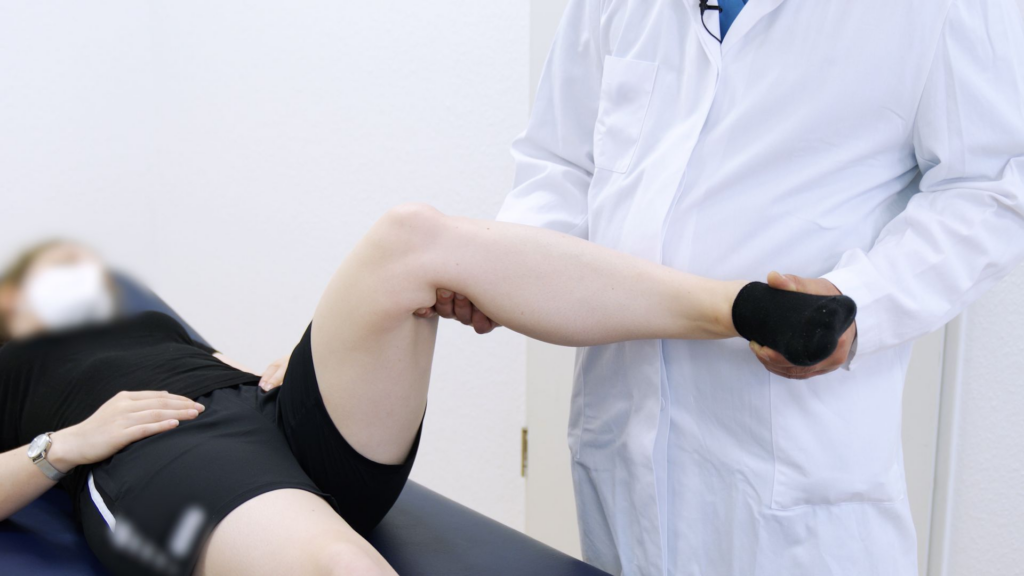
MCL valgus stress test

MCL Injuries: MCL Valgus Stress Testing, Grading, and Monitoring

In acute medial-sided knee pain, the MCL valgus stress test remains a fast, high-yield maneuver to guide triage, imaging, and early bracing decisions, especially when swelling and apprehension limit more complex exams. This workflow focuses on reproducible positioning, interpretation, and documentation so you can translate “opens up a bit” into clinically actionable language such as […]

MCL Injuries: MCL Valgus Stress Testing, Grading, and Monitoring Read More »

featured 13

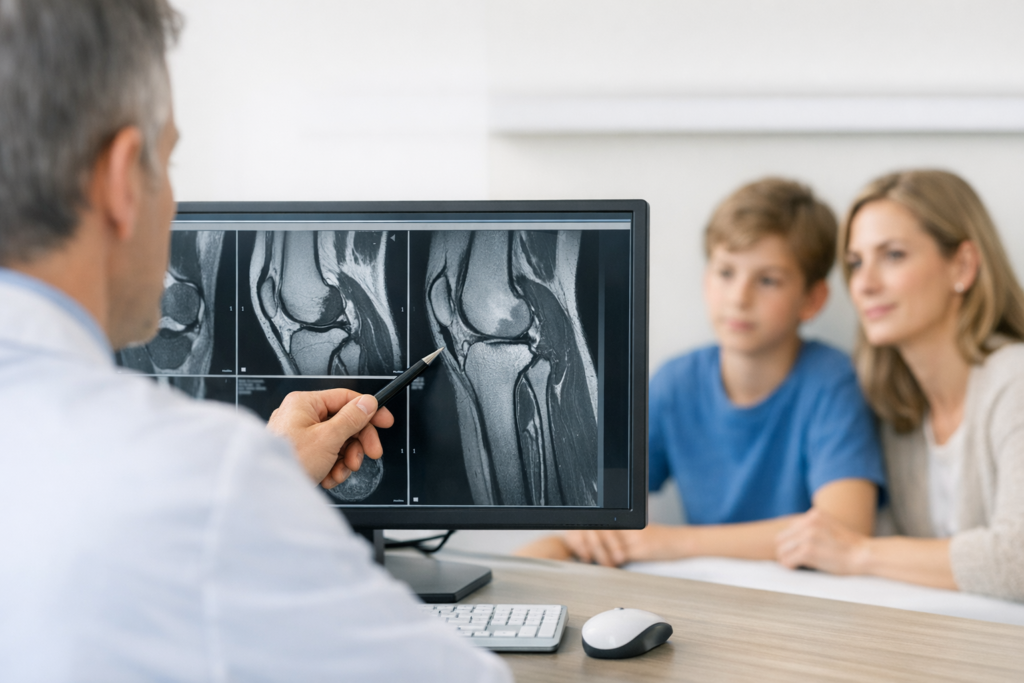
Pediatric ACL injury diagnosis: Critical pitfalls to avoid

Accurate pediatric ACL injury diagnosis is often harder than “small adult ACL” thinking suggests. Pain inhibition, apprehension, variable cooperation, and open physes can all distort the exam, while MRI can be challenged by partial injuries, developmental anatomy, and timing. When the clinical picture is uncertain, the priority is not just labeling a tear, but also

Pediatric ACL injury diagnosis: Critical pitfalls to avoid Read More »

featured 11

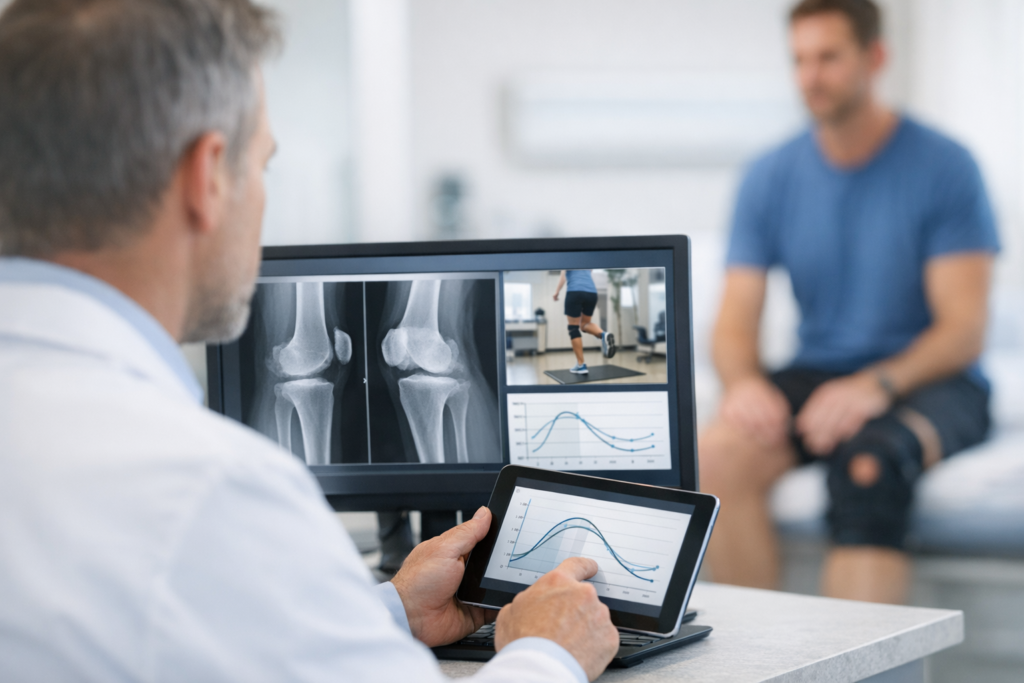
Knee stability metrics: Practical insight when rehab fails

Title: knee stability metrics: Practical insight when rehab fails Slug: rehab-milestones-vs-knee-stability-metrics Meta Title: Rehab milestones vs knee stability metrics: decision guide Meta Description: When hop tests and strength pass but laxity persists, interpret knee stability metrics with context: translation, pivot shift, and graft maturation. Focus Keyword: knee stability metrics Delete these META lines after pasting

Knee stability metrics: Practical insight when rehab fails Read More »

featured 10

Acute Knee Ligament Injury triage in Urgent Care: A Triage Algorithm for Suspected Ligament Injury

Acute knee trauma is common in urgent and emergency settings, but soft tissue injuries are frequently missed when pain, swelling, or limited exam conditions obscure key signs. This workflow is an acute knee injury algorithm designed for rapid risk stratification, safe early management, and consistent documentation, with special attention to suspected ACL and multi-ligament patterns.

Acute Knee Ligament Injury triage in Urgent Care: A Triage Algorithm for Suspected Ligament Injury Read More »

runner

ACL return to sport criteria: Practical safer clearance

Return-to-sport decisions after ACL injury or reconstruction are rarely limited by one variable. Even when an athlete “passes” strength and hop testing, persistent functional instability can remain clinically relevant, particularly for cutting and pivoting sports. Modern ACL return to sport criteria increasingly aim to triangulate performance capacity (strength, hops, movement quality) with symptoms, psychology, and

ACL return to sport criteria: Practical safer clearance Read More »

Lachman test, ACL Tear Detection

Knee Examination in Orthopaedics: From Clinical Tests to Robotic Precision

A thorough knee examination is essential for diagnosing ligament injuries, meniscal tears, and joint instability. Orthopaedic specialists rely on clinical tests and advanced diagnostic tools to evaluate knee function accurately. A structured approach to knee examination includes assessing patient history, performing a physical examination, and utilizing advanced diagnostic methods. This article explores these key aspects,

Knee Examination in Orthopaedics: From Clinical Tests to Robotic Precision Read More »

Flexbile woman jumping

What is Knee Laxity? Causes, Diagnosis & Testing Methods

Knee laxity refers to excessive looseness or instability of the knee joint, often resulting from ligamentous injury or degeneration. The knee joint relies on ligaments, tendons, and muscles to maintain stability and function. When these structures are compromised, abnormal movement patterns can occur, leading to pain, dysfunction, and an increased risk of further injury. Understanding

What is Knee Laxity? Causes, Diagnosis & Testing Methods Read More »

Screenshot 2024 12 30 at 14.39.50

Why Ligament Compliance/Stiffness Outperforms Laxity In ACL Treatment

Introduction – How a 1995 Study Transformed ACL Treatment Forever Bercovy, Weber – 1995 For decades, laxity has been the gold standard for evaluating anterior cruciate ligament (ACL) integrity, offering a straightforward measure of joint instability. However, research by Bercovy et al. (1995) revealed that laxity provides only a static snapshot of tibial displacement, failing

Why Ligament Compliance/Stiffness Outperforms Laxity In ACL Treatment Read More »

Upgrade

Why Upgrade KT1000/KT2000 to a Robotic Arthrometer? GNRB® and Dyneelax® Redefine Knee Diagnostics

Introduction In the evolving landscape of orthopaedic diagnostics, traditional tools like the KT1000 and KT2000 arthrometers are being eclipsed by robotic arthrometers such as DYNEELAX® and GNRB® . These advanced devices offer unparalleled precision, consistency, and functionality, setting new standards in the evaluation and treatment of knee ligament injuries.  This article explores why it’s time to upgrade KT1000/KT2000 to

Why Upgrade KT1000/KT2000 to a Robotic Arthrometer? GNRB® and Dyneelax® Redefine Knee Diagnostics Read More »