
Distinguishing ACL graft stretch vs failure is a common but high-stakes decision point after ACL reconstruction. Early subjective “giving way” can reflect graft elongation after ACL reconstruction, a traumatic re-rupture, or a non-graft driver like quadriceps inhibition, meniscal deficiency, tunnel malposition, or unaddressed rotational instability. The catch is that many of these scenarios overlap on basic exam, and imaging can look reassuring while functional laxity is clinically meaningful. This workflow focuses on what to ask, what to test, how to interpret side-to-side findings, and how to combine clinical examination, objective laxity metrics, and MRI in a clinician-led investigation that supports return-to-sport decisions and timely revision planning when needed.
ACL graft stretch vs failure: clinical definitions and why the distinction changes management
In day-to-day practice, “stretch” and “failure” are often used loosely. A useful way to frame ACL graft stretch vs failure is by the dominant mechanism behind instability:
- Functional graft elongation: progressive increase in anterior translation and/or rotational laxity over time, sometimes without a single clear traumatic event. This may coexist with tunnel factors, graft biology/maturation, early overload, or untreated anterolateral restraint issues.
- Structural graft failure (rupture): acute loss of graft continuity or fixation, often after a pivoting injury, and typically associated with a sudden step change in stability.
- Apparent laxity without graft compromise: symptoms that mimic instability, such as arthrogenic muscle inhibition (AMI), pain-driven guarding, or meniscal or chondral pathology producing “slips” or apprehension.
Why it matters: the threshold for activity modification, bracing, targeted rehab, extra-articular augmentation, or revision ACL differs substantially depending on whether the graft is intact-but-compliant versus mechanically failed.
Context check: expected trajectory vs abnormal change
Before labeling a case as failure, anchor the timeline to typical milestones and setbacks. If the symptom pattern is out of proportion to stage of rehabilitation, revisit the basics of post-op expectations using a clinician-facing recovery framework such as this guide to ACL reconstruction surgery, diagnosis, and recovery.
Red flags that should prompt a structured reassessment
Use a deliberate screen for early ACL graft failure signs:
- Clear traumatic pivot episode followed by swelling and an immediate sense of instability.
- New inability to trust the knee during deceleration, cutting, or landing.
- Step change in Lachman endpoint quality or pivot shift grade compared with prior documentation.
- Rapid recurrence of effusions during progressive return to running and plyometrics.
When symptoms are more insidious (intermittent giving way, gradual decline in confidence), consider relapse mechanisms outlined in ACL reinjury and ACL surgery failure relapse and broaden the differential beyond “the graft tore.”
Workflow: clinical tests for ACL graft integrity and rotational instability
This section operationalizes clinical tests for ACL graft integrity while explicitly integrating rotational instability (pivot shift), which is often the missing piece when anterior translation seems only mildly increased.
Step 1: History that discriminates “step change” vs “drift”
- Step change: “I felt a pop,” immediate instability, swelling within hours, and a new inability to pivot suggests rupture or fixation failure.
- Drift: a progressive return of giving way over weeks to months suggests graft elongation, progressive secondary restraint insufficiency, or malpositioned tunnels.
- Clarify sport demands (cutting, contact, skiing) and the exact task that triggers apprehension. Sport-specific diagnostic considerations can meaningfully shift suspicion for rotational drivers, as emphasized by Abu Mukh et al. (2026).
Step 2: Baseline objective knee exam (avoid common pitfalls)
Document a consistent examination set, including ROM, effusion grade, patellofemoral irritability, and joint line tenderness, using an objective framework such as objective knee examination in orthopaedics. Two practical pitfalls:
- Guarding can mask translation and pivot shift.
- Contralateral laxity matters; interpret any side-to-side difference in context.
Step 3: ACL-specific manual testing (standardize your endpoint language)
- Lachman: assess translation and, critically, endpoint quality. If your documentation varies between examiners, standardize technique using a reference such as the Lachman test guide for ACL injury detection.
- Anterior drawer: useful adjunct, especially when assessing concomitant meniscal behavior and patient relaxation.
- Pivot shift: capture grade, apprehension, and whether it reproduces the patient’s instability. A high-grade pivot with only modest Lachman translation should raise suspicion for anterolateral or PLC contribution, tunnel position issues, or meniscal deficiency.
Step 4: Screen secondary restraints and common masqueraders
- MCL/LCL laxity (valgus-varus at 0 and 30 degrees), posterolateral corner signs (dial test, varus thrust), and PCL assessment when posterior symptoms or trauma suggests combined injury.
- Meniscal deficiency or ramp lesion suspicion (locking, joint line pain, recurrent effusion) which can create “instability-like” events even with an intact graft.
Tech integration: objective laxity testing to investigate recurrent instability after ACL surgery
Objective measurement helps when the question is not “is the graft present?” but “how does it behave functionally?” In suspected recurrent instability after ACL surgery, objective laxity testing can quantify side-to-side translation, load-response, and dynamic behavior that may be difficult to capture consistently with manual tests alone. It should be positioned as complementary to MRI and clinical examination, not a replacement.
Where instrumented testing fits clinically (4 pathway use cases)
- Diagnostic support: In equivocal exams or borderline imaging, instrumented measures can help quantify functional instability and support a clinician-led differential alongside MRI for associated injury assessment.
- Surgical planning: Pre-revision or augmentation planning may benefit from quantifying anterior translation and rotational surrogates to align surgical strategy with the patient’s instability phenotype.
- Post-operative monitoring: Serial side-to-side metrics can help track stability during rehab and highlight unexpected changes that warrant reassessment.
- Prevention and screening: Baseline measurements in at-risk athletes or post-injury follow-up can support monitoring, with cautious interpretation alongside symptoms, strength, and movement quality.
What to measure when “stretch” is suspected
When the graft is intact but symptoms persist, consider whether the issue is best described as residual anterior laxity after ACLR or as a compliance problem (a more deformable graft under load). The clinical value of stiffness-style metrics is discussed in why ACL compliance and stiffness can outperform laxity. In practice, a knee can show a modest translation difference yet still feel unstable if the load-response curve is abnormal.
Device examples (contextual, not prescriptive)
Clinics using robotic or instrumented arthrometers may use tools such as the GNRB arthrometer for ACL assessment or the Dyneelax knee arthrometer to support repeatable, operator-independent testing pathways. For a broader overview of how these measurements are typically integrated, see knee laxity testing.
Interpretation pitfall: AMI and fear can mimic instability
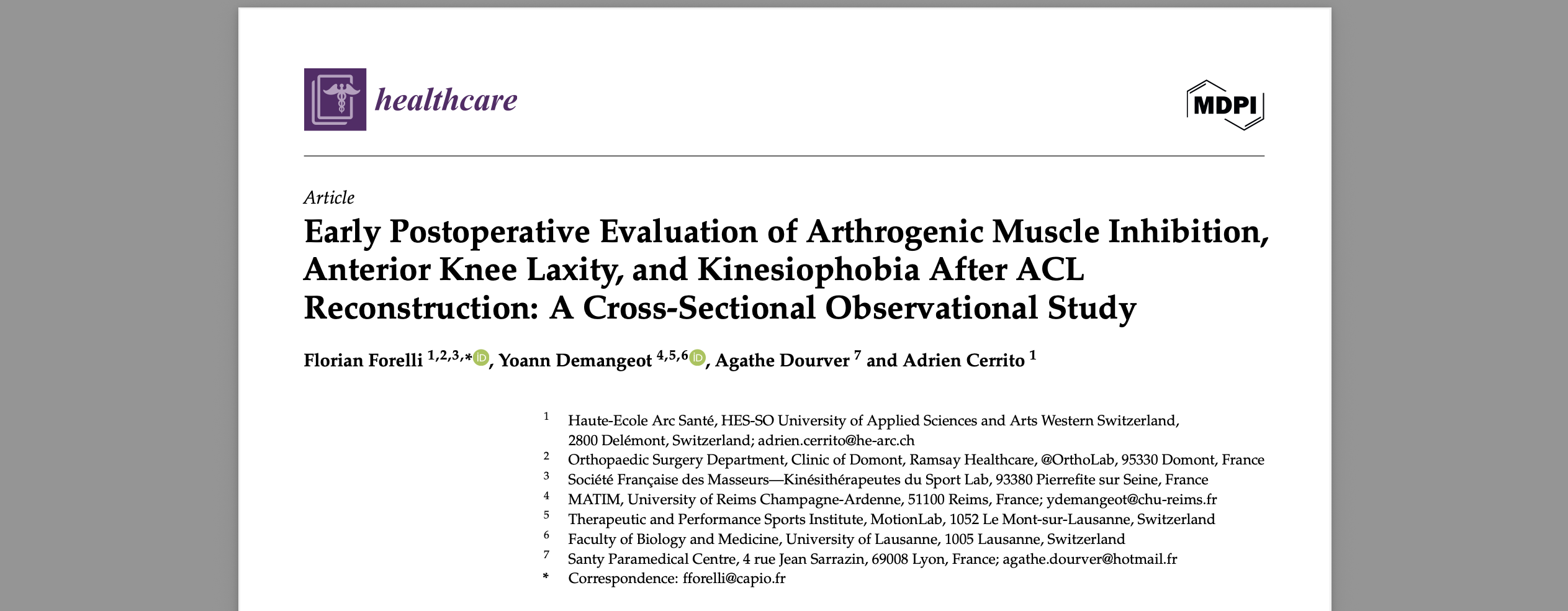
Not every “loose” sensation is mechanical. Quadriceps inhibition and kinesiophobia can alter movement strategies, produce episodes of perceived giving way, and complicate manual testing. If the exam and objective measures are discordant with the symptom story, consider AMI-driven contributors described in ACL reconstruction AMI, laxity, and kinesiophobia before escalating to invasive steps.
Imaging workflow: MRI findings of ACL graft failure and structural contributors
MRI remains central for assessing graft morphology and, importantly, associated injuries (meniscus, cartilage, bone bruising, cyclops lesion, tunnel position and widening, hardware). In the MRI findings of ACL graft failure pathway, aim to answer three questions: (1) is the graft continuous, (2) are there secondary signs of instability, and (3) is there a structural reason the graft may be overloaded.
How to combine MRI with objective laxity testing
When symptoms and manual tests suggest instability but MRI is borderline, functional quantification can clarify decision-making. A balanced discussion of combining modalities is outlined in MRI vs arthrometer for improving ACL tear detection. This is especially relevant when the graft appears intact yet the patient demonstrates repeatable instability events.
Structural contributors you can miss if you only read “graft intact”
- Tunnel position and angles: malposition can increase graft forces and drive progressive laxity.
- Graft bending angle: radiographic contributors have been explored in failed reconstructions, including a matched control analysis by Weiss et al. (2026).
- Meniscal deficiency: loss of secondary restraint (especially medial meniscus posterior horn) can amplify anterior translation and pivot phenomena.
- Cartilage or subchondral pathology: can drive effusions and functional instability symptoms.
Quantitative MRI signals and measured laxity (early follow-up)
If you are tracking early post-op changes, consider integrating graft signal and objective laxity trends rather than relying on a single snapshot. For an example of linking imaging biomarkers with measured laxity within the first year, see quantitative MRI UTE-T2 of ACL autografts and BMI-normalized knee laxity.
When ACL graft stretch vs failure is unclear: differential diagnosis graft stretch vs rupture and revision triggers
When you have symptoms plus measurable instability, the goal is to determine whether you are dealing with (a) a ruptured or mechanically failed graft, (b) graft elongation with persistent functional instability, or (c) a non-graft driver. This is the heart of the differential diagnosis graft stretch vs rupture discussion.
Decision aid (clinic-ready)
- Confirm instability phenotype: anterior translation only, rotational only, or combined? Document pivot shift grade and patient-reported task-specific giving way.
- Assess step change: acute pivot with effusion suggests rupture or fixation failure; gradual drift points toward elongation, tunnel factors, or secondary restraint deficiency.
- Look for drivers: meniscal deficiency, cyclops, chondral lesions, MCL/PLC laxity, malpositioned tunnels, or poor neuromuscular control.
- Triangulate: clinical exam + objective quantification + MRI. Discordance should prompt reassessment of exam quality (guarding), AMI, and rotational drivers.
- Align treatment to cause: rehab optimization and neuromuscular control for functional/AMI contributors; structural correction for tunnel or meniscal drivers; revision when mechanical insufficiency is confirmed and symptoms are function-limiting.
Residual rotational laxity: when extra-articular augmentation enters the conversation
Some patients have symptomatic residual laxity despite an apparently intact intra-articular graft. For selected cases, lateral extra-articular procedures have been evaluated as an option for residual laxity following ACL reconstruction. See the systematic review by Haque et al. (2026) for a current summary of isolated lateral extra-articular tenodesis in this context. This is not a blanket solution, but it underscores that “intact graft” does not always mean “stable knee,” particularly for pivoting athletes.
Revision thresholds: keep the language precise
Be explicit about revision ACL indications for graft failure in your documentation. Common clinician-led indications include function-limiting instability with objective laxity, confirmed graft rupture or mechanical insufficiency, and structural problems (tunnels, hardware) that make nonoperative management unlikely to succeed. A practical overview of the broader failed-ACLR workup and causes can be found in ACL revision surgery after a failed ACL reconstruction, and a narrative synthesis of failure etiologies and revision strategies is covered by Capece et al. (2026).
Graft choice and augmentation considerations (do not overinterpret early gains)
If you are planning revision, graft selection and potential augmentation should be individualized to sport, anatomy, and concomitant pathology. Evidence syntheses continue to evolve, including a systematic review and meta-analysis on LARS-augmented hamstring reconstructions by Antzoulas et al. (2026). Use such data as one input among many, alongside tunnel strategy, meniscal status, and rotational instability control.
Key takeaways and next steps
- ACL graft stretch vs failure is rarely answered by a single finding. Build the conclusion from symptom timeline, pivot mechanics, repeatable exam, objective laxity patterns, and MRI assessment of associated injuries.
- Document both anterior translation and rotational instability. A high-grade pivot shift with modest translation should prompt evaluation of anterolateral or PLC contributors and meniscal deficiency.
- Use objective measures to quantify residual anterior laxity after ACLR and load-response when the story is “intact but unstable,” and keep testing positioned as complementary to MRI.
- When symptoms are function-limiting, clearly record the rationale for treatment escalation, including revision ACL indications for graft failure, and ensure structural drivers (tunnels, meniscus) are addressed in the plan.
Next steps in clinic: standardize your exam set, capture baseline and follow-up objective laxity where available, obtain MRI when structural assessment is needed, and re-check for rotational and secondary restraint deficits before deciding that a patient’s instability is purely “graft stretch.”
Clinical references (PubMed)
1) 2026 — Haque et al. — Outcomes of Isolated Lateral Extra-articular Tenodesis for Residual Laxity Following ACL Reconstruction: A Systematic Review. — Orthop J Sports Med — DOI: 10.1177/23259671261416444 — PMID: 41783085 — PubMed
2) 2026 — Weiss et al. — Radiographic Measurement of Graft Bending Angle in Failed Anterior Cruciate Ligament Reconstructions: A Matched Control Analysis. — J Am Acad Orthop Surg Glob Res Rev — DOI: 10.5435/JAAOSGlobal-D-25-00470 — PMID: 41779927 — PubMed
3) 2026 — Capece et al. — Anterior Cruciate Ligament Reconstruction Failure: Etiology, Classification, and Revision Strategies-A Narrative Review. — J Funct Morphol Kinesiol — DOI: 10.3390/jfmk11010077 — PMID: 41718205 — PubMed
4) 2026 — Abu Mukh et al. — Sport-Specific Considerations in ACL Reconstruction: Diagnostic Evaluation and Graft Selection. — Diagnostics (Basel) — DOI: 10.3390/diagnostics16040584 — PMID: 41750733 — PubMed
5) 2026 — Antzoulas et al. — LARS-augmented hamstring ACL reconstruction shows better early but similar long-term outcomes compared with hamstring autograft alone: A systematic review and meta-analysis. — J Exp Orthop — DOI: 10.1002/jeo2.70654 — PMID: 41743308 — PubMed