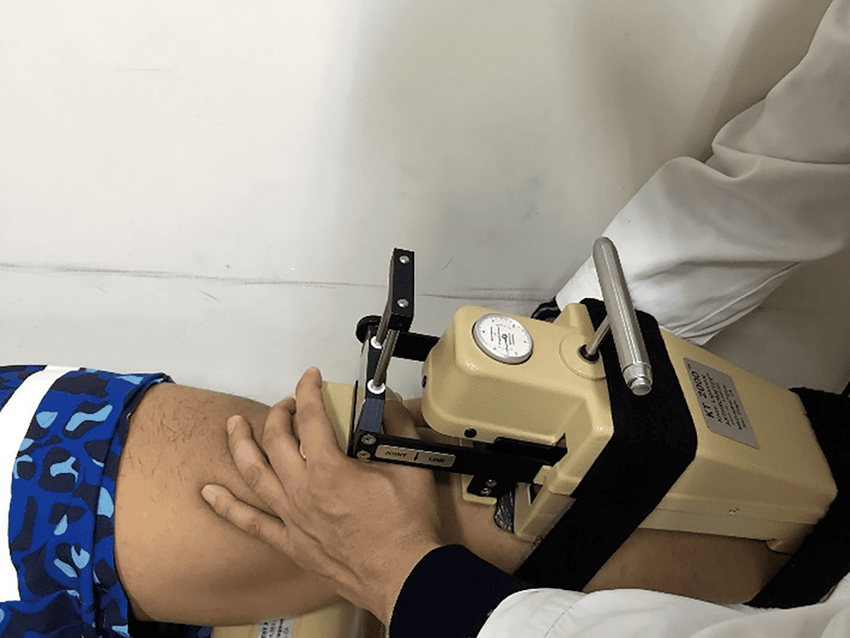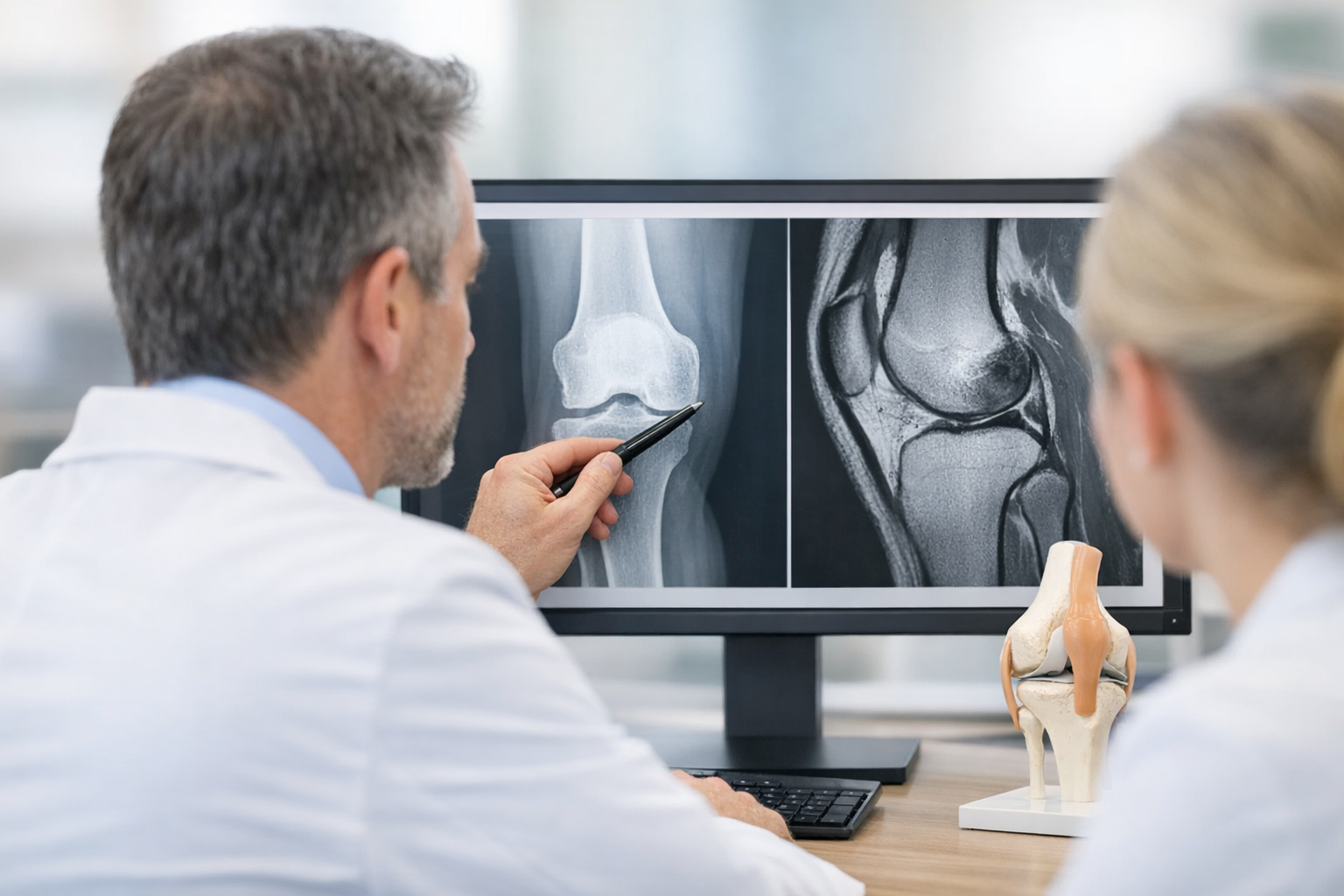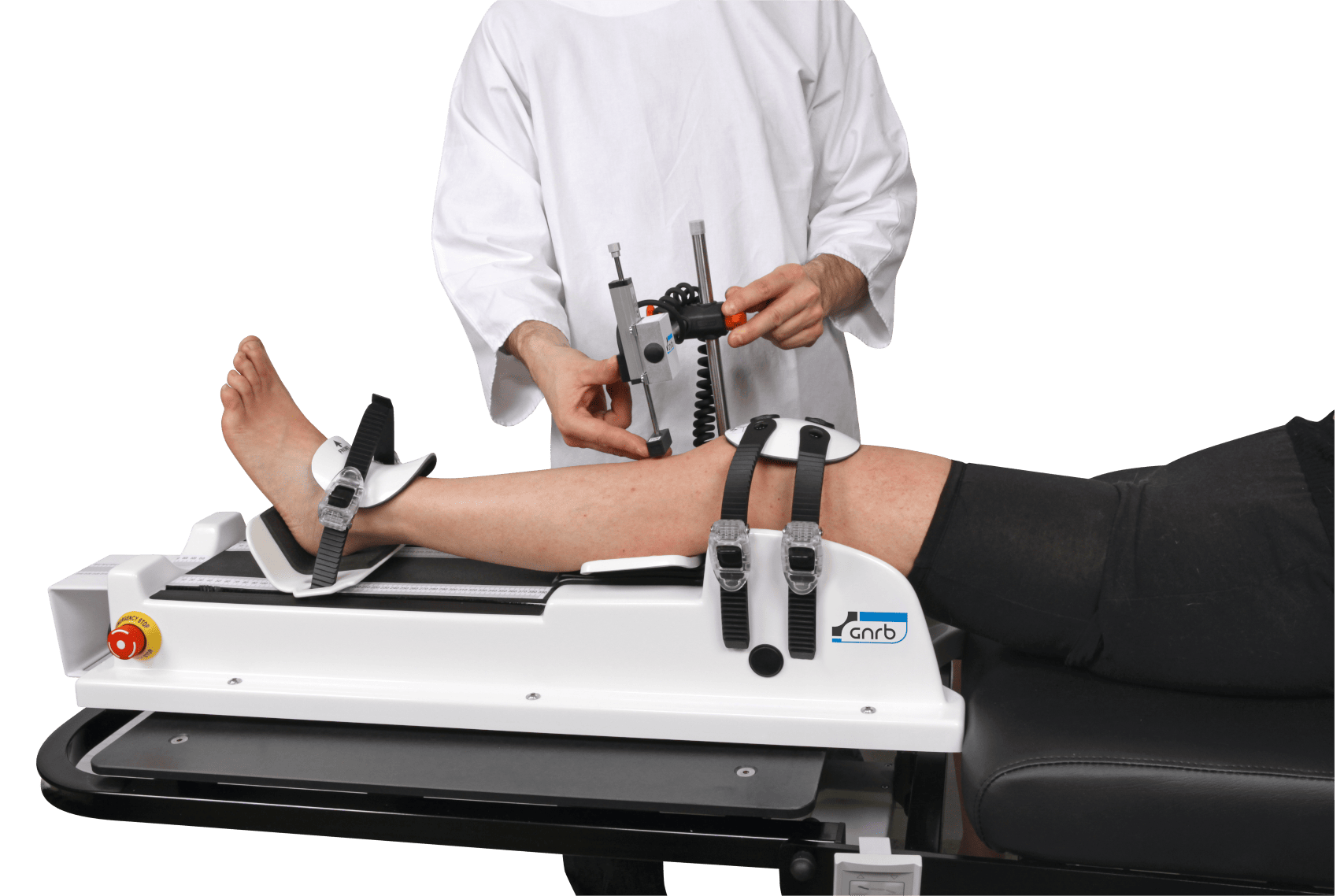

A high-grade pivot shift is not just a “positive ACL test”. It is a clinically meaningful signal that the knee’s rotational knee instability is functionally relevant and may involve more than the intra-articular ACL alone. In day-to-day practice, it can change how you interpret exam findings, how you scrutinize imaging for lateral and posterolateral restraints, and how you counsel athletes about risk of giving-way and secondary injury. This guide focuses on what a high-grade result usually implies, how to standardize pivot shift grading, common pitfalls (especially in the awake patient), and the practical next steps that support an evidence-based, clinician-led treatment plan.
1. Why a high-grade pivot shift changes the risk conversation
The pivot shift is a dynamic phenomenon: anterior subluxation of the lateral tibial plateau in extension with reduction during flexion, reflecting failure of restraints to combined valgus and internal rotation loads. When the shift is clearly dramatic, it is more likely to correlate with the patient’s real-world “giving way” than an isolated translation measure.
Clinically, a high-grade finding often travels with:
- Functional instability despite good strength or minimal swelling.
- Higher suspicion of lateral-sided pathology (lateral meniscus, capsular restraints, anterolateral complex, or PLC involvement).
- Greater concern for recurrent giving-way episodes and secondary meniscal or chondral damage if return to pivoting sport is attempted untreated.
When you are framing high-grade pivot shift prognosis, it is usually more helpful to talk about “risk under load” than a binary intact/ruptured narrative. Even among ACL-injured patients, the pivot shift spectrum is broad, and the same MRI-described “ACL tear” can present with very different rotational control.
For context on how pivot shift fits within broader ACL assessment, revisit common clinical exam batteries in this overview of ACL injury patterns, and align your language with a shared definition of what knee laxity means clinically.
Imaging remains important, but be cautious about over-weighting static imaging when the complaint is dynamic giving-way. A recent multicenter cohort found that anterior tibial subluxation differences (measured with a bone axis method) predicted high-grade pivot shift in ACL-deficient knees, supporting the concept that some “morphologic” patterns align with more dramatic dynamic instability: Hayashi et al. (2026).
2. high-grade pivot shift and pivot shift grading: how to interpret it reliably
2.1 What “high-grade” usually means in practice
Most clinicians use a 0 to 3+ system (or a 0 to 2 system) where “high-grade” typically refers to a clearly visible or palpable clunk (often grade 2 to 3). The core interpretation is that the lateral compartment reduction event is pronounced enough to be obvious, not merely a glide.
Because grading can vary between examiners, it helps to document:
- Awake vs anesthetized exam.
- Technique used (classic pivot shift, Jerk test, Slocum variant).
- Quality of endpoint and whether guarding was present.
- Whether the contralateral knee was tested in the same way.
2.2 Where the pivot shift sits among “ACL rupture clinical examination” maneuvers
In ACL rupture clinical examination, the pivot shift complements, rather than replaces, translation-focused tests. The Lachman helps you judge anterior translation and endpoint quality, while the pivot shift probes coupled rotation and subluxation behavior. If you want a structured comparison when rotational instability is suspected, use this Lachman test guide and place it alongside your broader set of top ACL diagnostic tests used in clinic.
Pitfall: a low-grade or “negative” pivot shift awake does not rule out clinically important rotational instability. Guarding, hamstring activation, pain, and apprehension can suppress the phenomenon. Conversely, a dramatic pivot shift can occasionally be elicited in very lax patients even with partial injury patterns, so integrate the full picture rather than anchoring on a single maneuver.
2.3 Biomechanical context: why the medial side still matters
Although the pivot shift is classically “lateral compartment driven,” medial and central structures influence coupled motion and how loads are shared across the joint. When medial support is compromised (or when valgus alignment and MCL laxity coexist), the same rotational load can produce a more dramatic subluxation-reduction event. For a refresher on these stabilizers, see medial plane stabilizing structures.
3. What a high-grade pivot shift suggests about associated injury and the workup
A clearly positive pivot shift should trigger a purposeful search for co-pathology that amplifies rotation, particularly on the lateral side. This is where “what you do next” matters more than the label.
3.1 Lateral and posterolateral structures to actively consider
Common amplifiers of a dramatic pivot shift include:
- Anterolateral ligament injury or broader anterolateral complex disruption.
- Lateral meniscus tears, especially posterior horn/root patterns that impair secondary restraint and load sharing.
- Posterolateral corner injury (PLC), including LCL/PLC complex involvement, which can add varus and rotational laxity.
- Capsular injury, Segond-type avulsion patterns, or lateral tibial plateau morphology that predisposes to subluxation.
Rotational findings should also be interpreted alongside alignment, generalized laxity, pivoting sport demands, and prior episodes of giving-way. A “high-grade” exam finding with recurrent instability symptoms is a different clinical problem than an acute first-time injury with large effusion and limited exam reliability.
3.2 Practical next steps: clinical exam, imaging, and documentation
A useful approach is to separate confirmation of instability from characterization of the injury pattern.
Decision aid (clinic-friendly):
- Confirm the history of giving-way, pivoting mechanism, and timing of swelling.
- Repeat exam with pain control and technique standardization; document pivot shift grade and whether guarding limited reliability.
- Add targeted tests for collateral and PLC involvement (varus/valgus at 0 and 30 degrees, dial test, posterolateral drawer, recurvatum).
- Use MRI to assess meniscus, cartilage, bone bruising, and lateral-sided injury patterns relevant to surgical planning.
- Record baseline function and goals (cutting sports, occupational demands) to support shared decision-making.
To keep the workflow consistent, consider building your note around an objective knee examination in orthopaedics template, and correlate subjective instability with task-provoked symptoms discussed in dynamic knee testing approaches.
Emerging surgical literature also highlights that rotational outcomes can be sensitive to technical details when addressing lateral restraints. For example, residual rotational instability after ALL reconstruction may depend on femoral tunnel position: Byun et al. (2026). While this does not define a universal “best technique,” it reinforces that lateral-side strategy should be deliberate when the pivot shift is pronounced.
4. Management implications: surgical planning, lateral procedures, and return-to-sport risk
This is where the exam meaningfully influences the ACL reconstruction clinical decision. Not every ACL tear with a pivot shift needs the same operation, but a more dramatic rotational event can raise the threshold for “ACL-only” thinking, particularly in young pivoting athletes, revision settings, generalized laxity, or when lateral structures are suspected to be insufficient.
4.1 Translating the exam into “lateral extra-articular tenodesis indications”
When considering lateral extra-articular tenodesis indications, the clinical question is usually: “Is there a reasonable chance that ACL reconstruction alone will leave functionally relevant rotational laxity?” In that context, two recent studies are often cited in discussions about intraoperative decision-making and high-grade preoperative findings:
- In a large retrospective review, using a residual pivot shift as the indication to add LET during ACL reconstruction with hamstring grafts was associated with improved surgical outcomes: Porter et al. (2026).
- Among male patients with high-grade pivot shift undergoing ACL reconstruction with quadrupled hamstring autograft, deep LET was associated with improved tibial internal rotational stability and favorable patient-reported outcomes compared with superficial LET: Şahbat et al. (2026).
These data support a risk-stratified approach: if rotational instability is clinically substantial (especially if it persists under anesthesia or after graft fixation), lateral augmentation may be part of the conversation. That said, procedural choice should still be individualized to patient factors, concomitant injury, and surgeon experience.
If you are weighing whether an extra-articular procedure meaningfully changes sagittal laxity expectations, this discussion of whether LET affects sagittal knee laxity can help frame counseling and postoperative assessment goals.
4.2 Graft choice and combined strategies (interpret cautiously)
Combined procedures and alternative graft selections are increasingly reported. For example, ACL reconstruction using peroneus longus with LET has been reported with excellent functional outcomes and high return to sport over 2 years in a prospective cohort: Arora et al. (2026). Cohort results can inform expectations, but they should not be over-interpreted as proof of superiority across populations.
In pre-op counseling, it is reasonable to communicate that a dramatic pivot shift can be a marker for higher instability burden and may influence surgical planning, while emphasizing that the final plan depends on the complete evaluation (associated meniscus injury, cartilage status, alignment, and objective exam under anesthesia when applicable).
5. After reconstruction: residual pivot shift, interpretation, and escalation
Persistent instability after surgery is multifactorial. Graft failure is only one possibility; others include missed or progressive meniscal pathology, unaddressed malalignment, tunnel position issues, inadequate graft size, laxity from biological remodeling, and untreated lateral or PLC deficiency.
When dealing with residual pivot shift after ACL reconstruction, it is helpful to separate three scenarios:
- Early postoperative rotational laxity (technique, fixation, or unrecognized co-injury).
- Late recurrent instability (new trauma, graft stretching/rupture, progressive meniscal deficiency).
- Subjective giving-way without clear laxity (neuromuscular control deficits, fear avoidance, or pain-driven instability sensations).
In this setting, a recurrent high-grade pivot shift is particularly concerning because it suggests functionally meaningful rotational breakdown under clinical load. The workup should be clinician-led and systematic, and may include re-exam under anesthesia, careful imaging review, and assessment for alignment and secondary restraints.
If revision becomes a consideration, use a structured approach to indications, imaging, and strategy selection as summarized in this guide to ACL revision surgery options.
Finally, avoid equating “laxity” with “function” too simplistically. A knee can have modest translation differences but still behave poorly dynamically, and vice versa. This is why it can help to think beyond absolute displacement and consider the quality of the mechanical response discussed in ACL compliance and stiffness when interpreting postoperative stability, rehabilitation progress, and readiness for sport.
Key takeaways and next steps:
- A high-grade pivot shift often indicates a higher rotational instability burden and should prompt a deliberate search for lateral meniscal, anterolateral, and PLC contributors.
- Standardize documentation (awake vs anesthetized, technique, guarding) to make pivot shift grading clinically actionable over time and between providers.
- Use MRI as complementary for associated injuries and surgical planning; integrate it with symptoms and examination rather than using it in isolation.
- When instability risk is high, consider whether combined strategies (including lateral augmentation) are appropriate, referencing current evidence and patient-specific factors.
- If instability persists post-reconstruction, re-evaluate the full construct (tunnels, graft, meniscus, alignment, lateral restraints) before concluding “failed ACL.”
6. Clinical references (PubMed)
1) 2026 – Şahbat et al. – Deep lateral extra-articular tenodesis (LET) is associated with improved tibial internal rotational stability and favourable patient-reported outcomes compared with superficial LET in high-grade pivot-shift male patients undergoing quadrupled hamstring autograft ACL reconstruction. – Knee Surg Sports Traumatol Arthrosc – DOI: 10.1002/ksa.70372 – PMID: 41758989 – PubMed
2) 2026 – Porter et al. – Using a Residual Pivot Shift as the Indication to Perform a Lateral Extra-articular Tenodesis During ACL Reconstruction Using Autologous Hamstring Grafts Is Associated With Improved Surgical Outcomes: A Retrospective Review of 4755 Cases. – Am J Sports Med – DOI: 10.1177/03635465251399208 – PMID: 41546441 – PubMed
3) 2026 – Arora et al. – Anterior cruciate ligament reconstruction using peroneus longus with lateral extra-articular tenodesis has excellent functional outcomes with a high return to sport rate: A prospective cohort study of 482 patients over 2 years. – Knee – DOI: 10.1016/j.knee.2026.104404 – PMID: 41722485 – PubMed
4) 2026 – Byun et al. – Anterior cruciate ligament reconstruction achieved noninferior patient reported outcome measures while residual rotational instability depends on anterolateral ligament femoral tunnel position: A matched analysis. – Knee – DOI: 10.1016/j.knee.2026.104405 – PMID: 41722482 – PubMed
5) 2026 – Hayashi et al. – Difference in anterior tibial subluxation measured with the bone axis method predicts high-grade pivot shift in ACL-deficient knees: A multicenter cohort study. – J Exp Orthop – DOI: 10.1002/jeo2.70675 – PMID: 41768539 – PubMed